

ALLATRA GRC Brings an Early-Warning Perspective on Stigmatization to the OSCE Human Dimension Meeting in Vienna
Vienna, June 30, 2026 — ALLATRA Global Research Center (GRC) contributed to the OSCE Supplementary Human Dimension Meeting, “Preventing Torture and Ill-Treatment: Strengthening Cooperation and Implementation,” held in Vienna on June 29–30, 2026.
The meeting’s official agenda addressed safeguards in criminal justice, training and monitoring, accountability, remedies and rehabilitation for survivors. ALLATRA GRC’s contribution focused on an earlier link in the preventive chain: the information environment where individuals and communities can be stigmatized, isolated, and progressively deprived of equal public recognition and protection.
On June 29, ALLATRA convened a side event, “From Stigmatization to Ill-Treatment: Lessons from Russia and Beyond, Early Warning Signs, Human Dignity, and Prevention of Abuse.” It took place as part of the OSCE side-event program and brought together legal researchers, civil-society representatives, and experienced speakers from across the OSCE region and beyond.
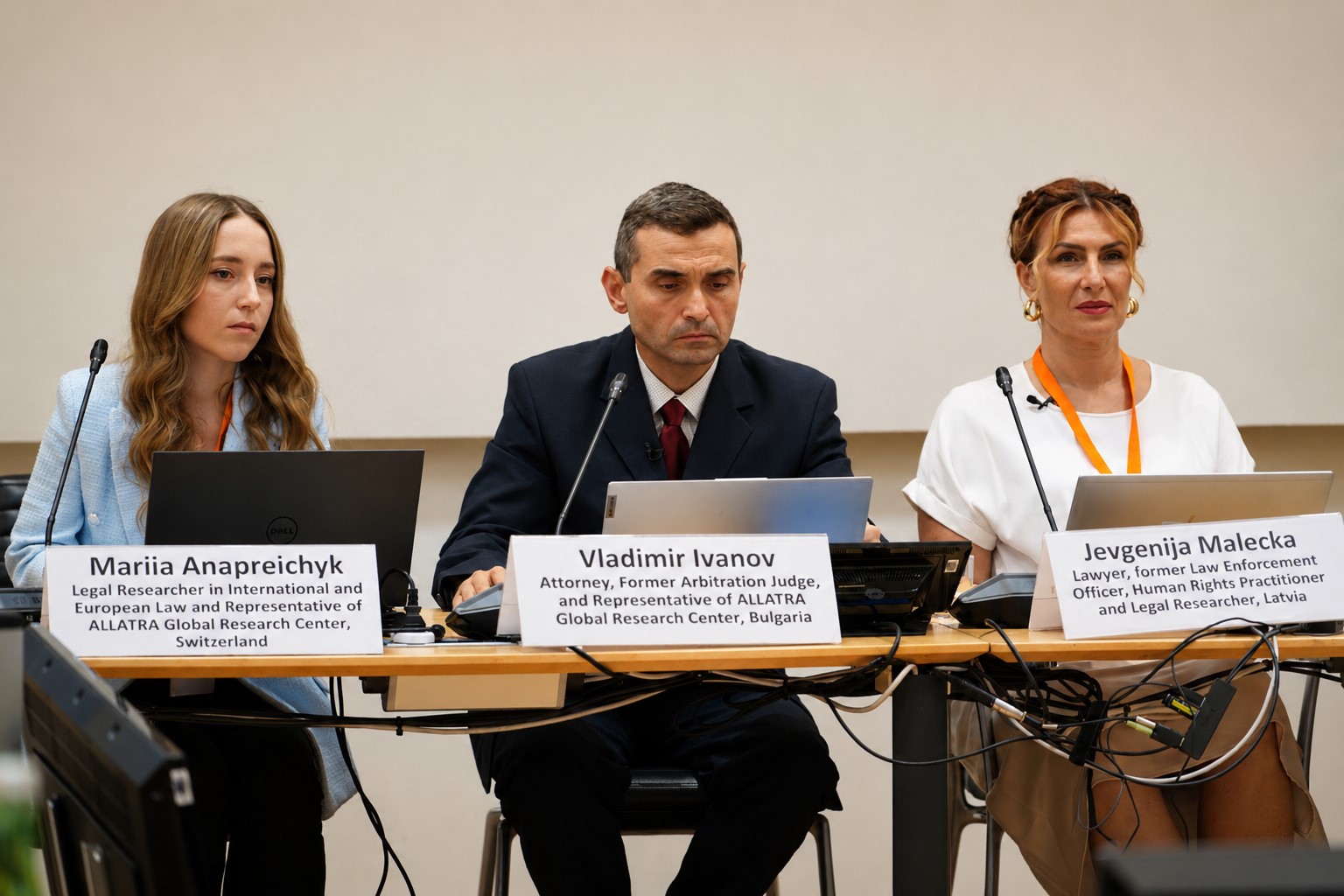
ALLATRA GRC representatives, from left to right: Mariia Anapreichyk, Vladimir Ivanov, and Jevgenija Malecka, at the OSCE side event in Vienna
The discussion examined how repeated labels, smear campaigns, and dehumanizing narratives may affect public attitudes, access to opportunities, and effective remedies long before an overt violation is formally recognized. The following question was raised: how democratic societies can respond lawfully and proportionately, while preserving freedom of expression and avoiding normalization of discrimination or collective suspicion?
Opening the event, Vladimir Ivanov, attorney, legal researcher, and ALLATRA GRC representative from Bulgaria, argued that prevention should look beyond the final and visible stages of abuse.
“At what precise point does social stigmatization transform into a systemic human rights risk, and when does institutional pressure begin to replace equal protection under the law?”
Among the speakers was Alberto Contu, Senior Advisor on Constitutional Theory and Ethical Governance from Italy, whose prerecorded contribution addressed the relationship between constitutional safeguards and everyday institutional practice. He emphasized that constitutional commitments must remain effective in the work of courts, public administrations, and law enforcement agencies.
“We need to move beyond the criminal law of suspicion and spread the culture of due process at all levels: powers must be subordinate to rights.”
His remarks warned against replacing evidence and individual assessment with stereotypes, presumed group characteristics, or the criminal law of suspicion.
Dr. Aicha Bacha, political scientist from Belgium, Founder and President of the European Center for Development and Geostrategic Studies and Analysis (ECDA), addressed stigmatization through the lens of access to public employment, social cohesion, and equal participation. She emphasized that exclusion or underrepresentation of certain communities in public institutions can undermine public trust, social cohesion, and equal involvement in democratic life.
“When communities see themselves systematically absent from the institutions that govern them, the signal received is a profound one. It says: your participation is welcome in some spaces, but not in the spaces that matter most.”
A witness of persecution from the Russian Federation, whose identity was not disclosed for security reasons, gave a personal account of the reported human rights violations affecting former ALLATRA volunteers in Russia. The witness described how years of stigmatizing media narratives preceded official restrictions, raids, and criminal proceedings. The testimony recounted reported home searches, coercive interrogations, and raids by Russian law enforcement against former volunteers.
“A coordinated campaign to discredit ALLATRA began as early as 2015. For seven years, defamatory materials about us were regularly published in the media. We were deliberately branded a ‘destructive sect’ and ‘apocalyptic cult,’ not because those labels reflected reality, but because they served to create the image of an enemy.”
The witness also described how, during interrogations, investigators sought to discourage discussion of climate-related issues. Recalling the experience of another former ALLATRA volunteer, the witness reproduced words of the investigator:
“You are not allowed to talk about climate. That topic is forbidden.”
Leoš Strnad, representative of Falun Dafa in the Czech Republic, discussed reported forms of transnational repression, including threats, disinformation, institutional pressure, and attempts to isolate a targeted community from public support. He urged institutions to assess patterns rather than treating every incident as a disconnected controversy.
“When we speak about torture and ill-treatment, we naturally think about detention centres, police stations, interrogations, and prisons. But, torture almost never begins there. It begins when a group is portrayed as dangerous, irrational, disloyal, or unworthy of protection.”
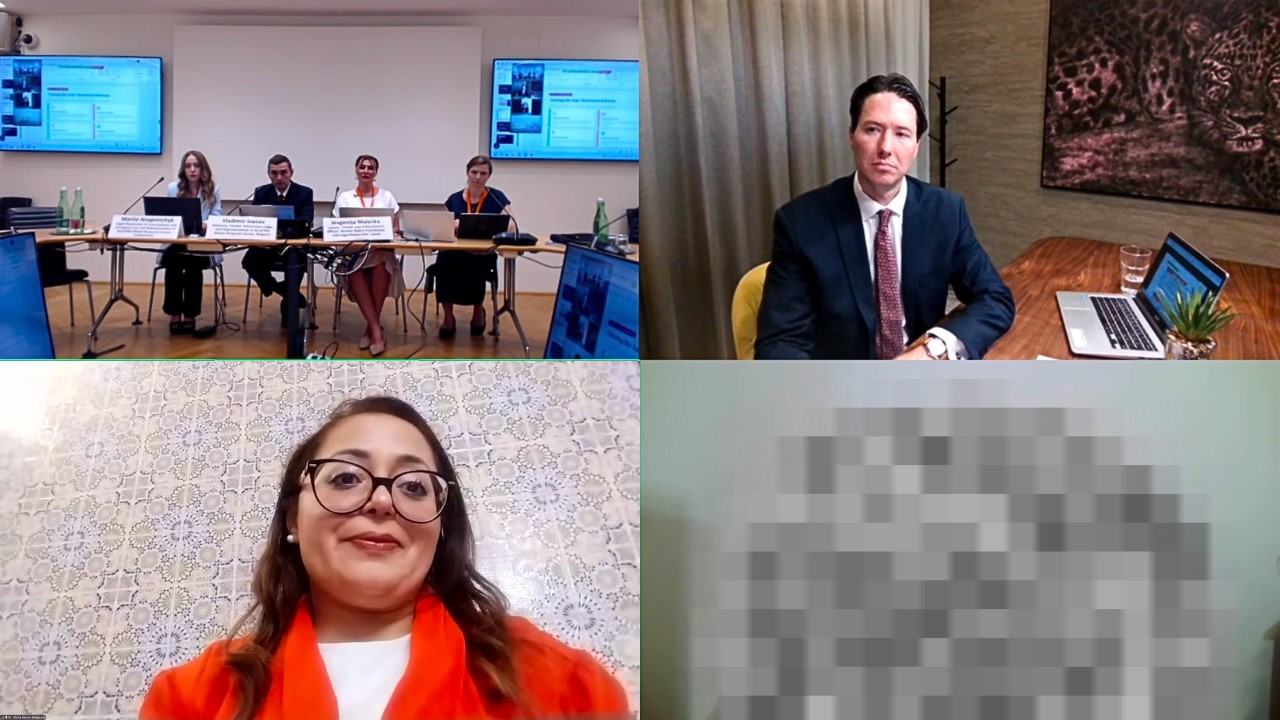
Clockwise from top left: ALLATRA GRC representatives at the OSCE side event in Vienna; Leoš Strnad, representative of Falun Dafa in the Czech Republic; a witness of persecution from the Russian Federation (identity withheld for security reasons); and Dr. Aicha Bacha, Founder and President of the European Center for Development and Geostrategic Studies and Analysis (ECDA)
Mr. Strnad’s contribution addressed reported intimidation and reputational attacks affecting Falun Dafa practitioners and Shen Yun Performing Arts outside China, including potential impact on freedom of religion or belief, freedom of expression, and the willingness of institutions to offer protection.
Mariia Anapreichyk, legal researcher in international and European law and ALLATRA GRC representative based in Switzerland, focused on the impact of stigmatization on access to justice. She noted that legal remedies may become practically illusory when organizations have to divert substantial resources from their legitimate activities to respond to sustained campaigns of public discrediting across several jurisdictions.
“The most effective preventive measure is not merely to respond after abuse occurs. It is to interrupt the process at its earliest stages.”
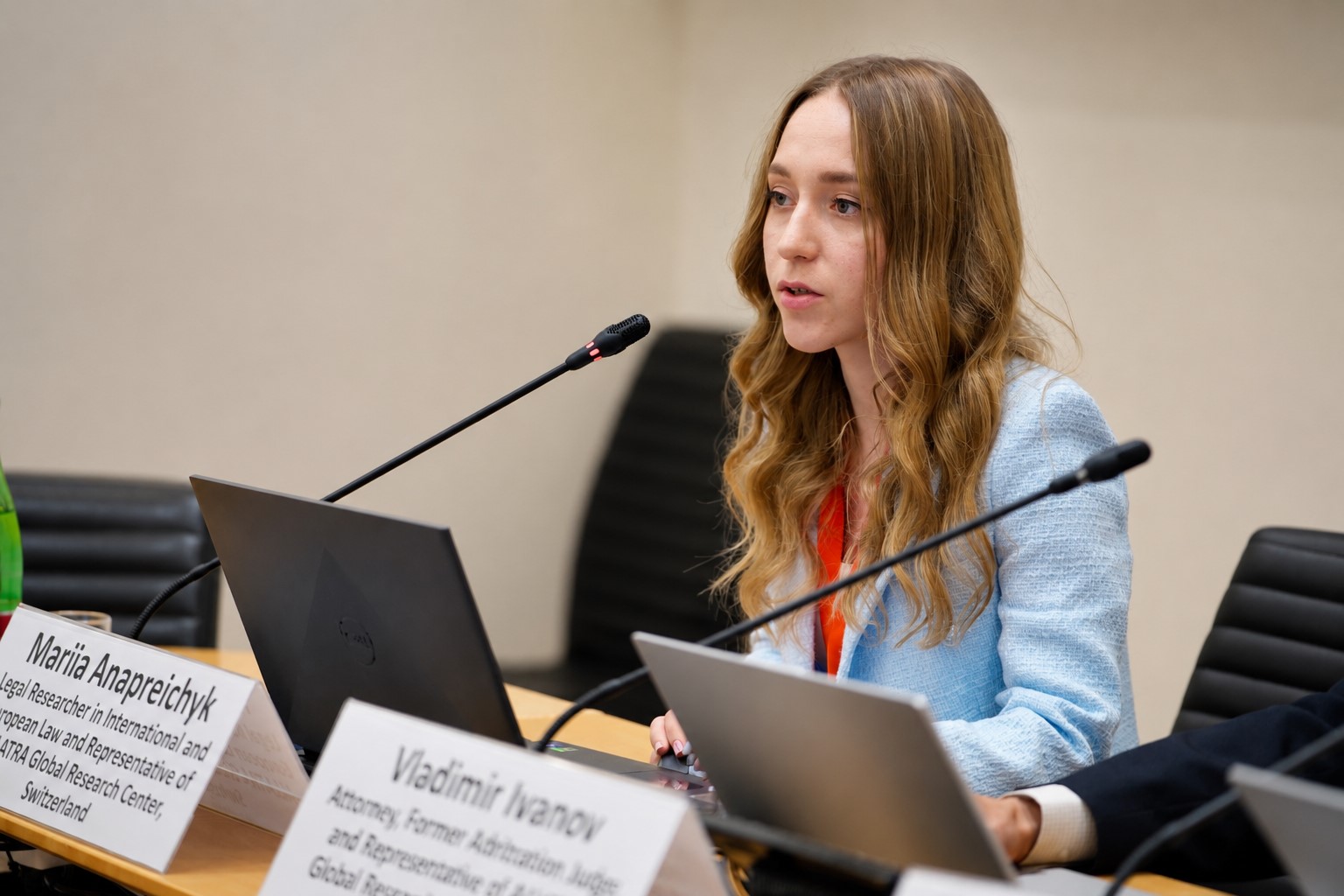
Mariia Anapreichyk speaking at the OSCE side event in Vienna
Finally, Jevgenija Malecka, a Latvian lawyer, former law enforcement officer, human rights practitioner, legal researcher, and representative of ALLATRA GRC, presented a criminological framework which she described as information terrorism. She examined the framework in detail, indicating how coordinated information campaigns can use stigmatizing labels, dehumanization, and construction of an “enemy image” to undermine public trust and create conditions in which discrimination or repression may appear acceptable. She underscored:
“The most dangerous element is legitimization of the unacceptable. Information terrorism shifts the moral climate of a country to the point where discrimination, persecution, or repression against a targeted group begin to seem ‘justified’ or even ‘necessary’ to save the state.”
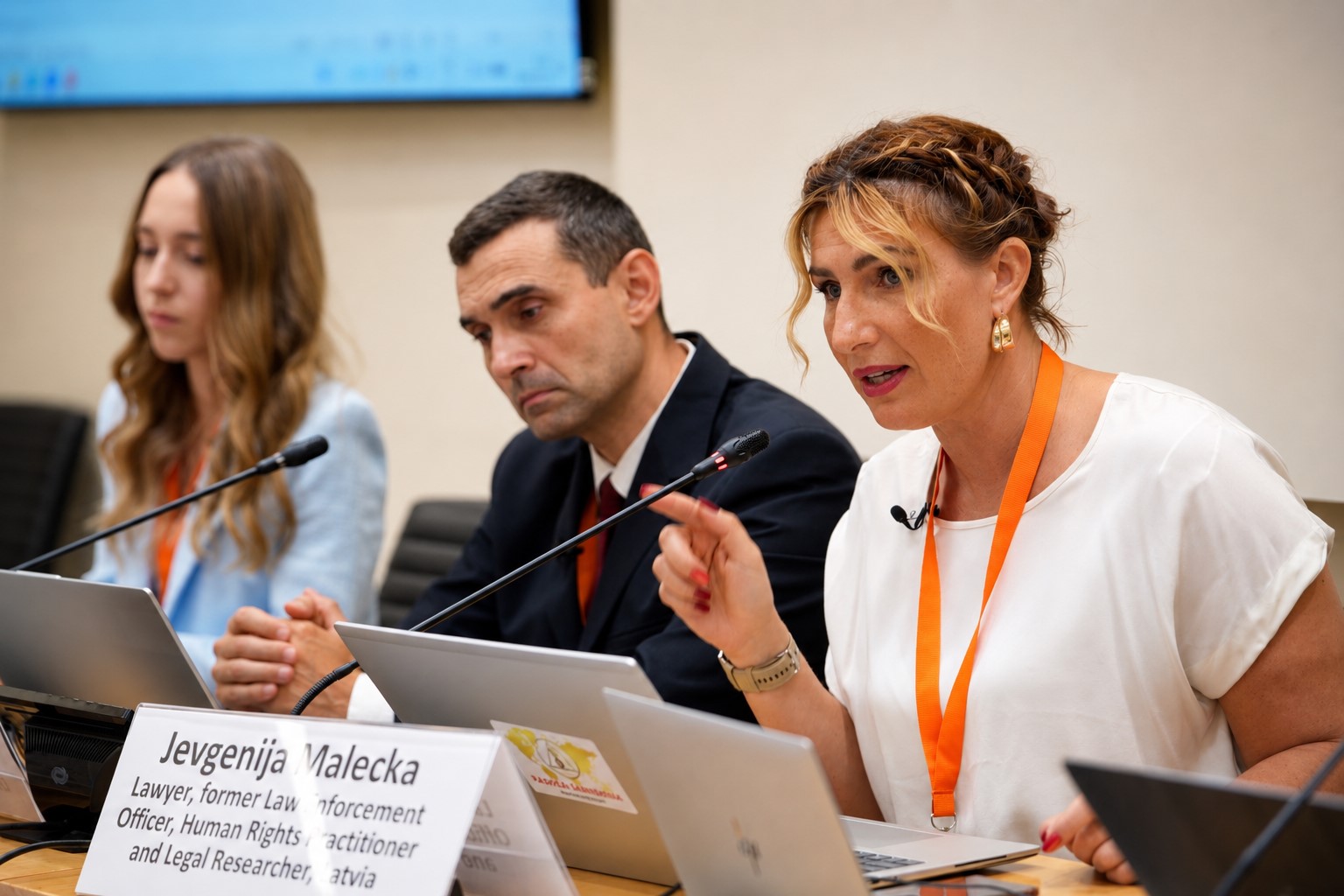
Jevgenija Malecka speaking at the OSCE side event in Vienna
The side event considered examples and reported concerns involving civil society, religious communities, and ethnic groups in Belgium, Russia, Ukraine, China, and transnational information environments. Speakers examined the point where systematic and coordinated dehumanizing rhetoric can contribute to discrimination, exclusion, institutional pressure, and reduced willingness to protect those who are targeted.
The same preventive perspective was reflected in the meeting’s plenary discussion on training, monitoring, and enhanced oversight. In his speech, Mr. Ivanov argued that coordinated stigmatization and dehumanizing narratives must be recognized as potential early warning indicators in the prevention of torture and ill-treatment. Referring to examples previously presented by ALLATRA GRC, he cited Russian anticult narratives describing Ukraine as a “totalitarian hypersect” and Ukrainians as “cannibals.” If such dehumanizing labels are disseminated systematically over a prolonged period of time, they can gradually normalize hostility, erode empathy, and create conditions in which discrimination, ill-treatment, and other severe human rights violations become more likely. In other words, such narratives may have played a role in justification of Russian aggression against Ukraine.
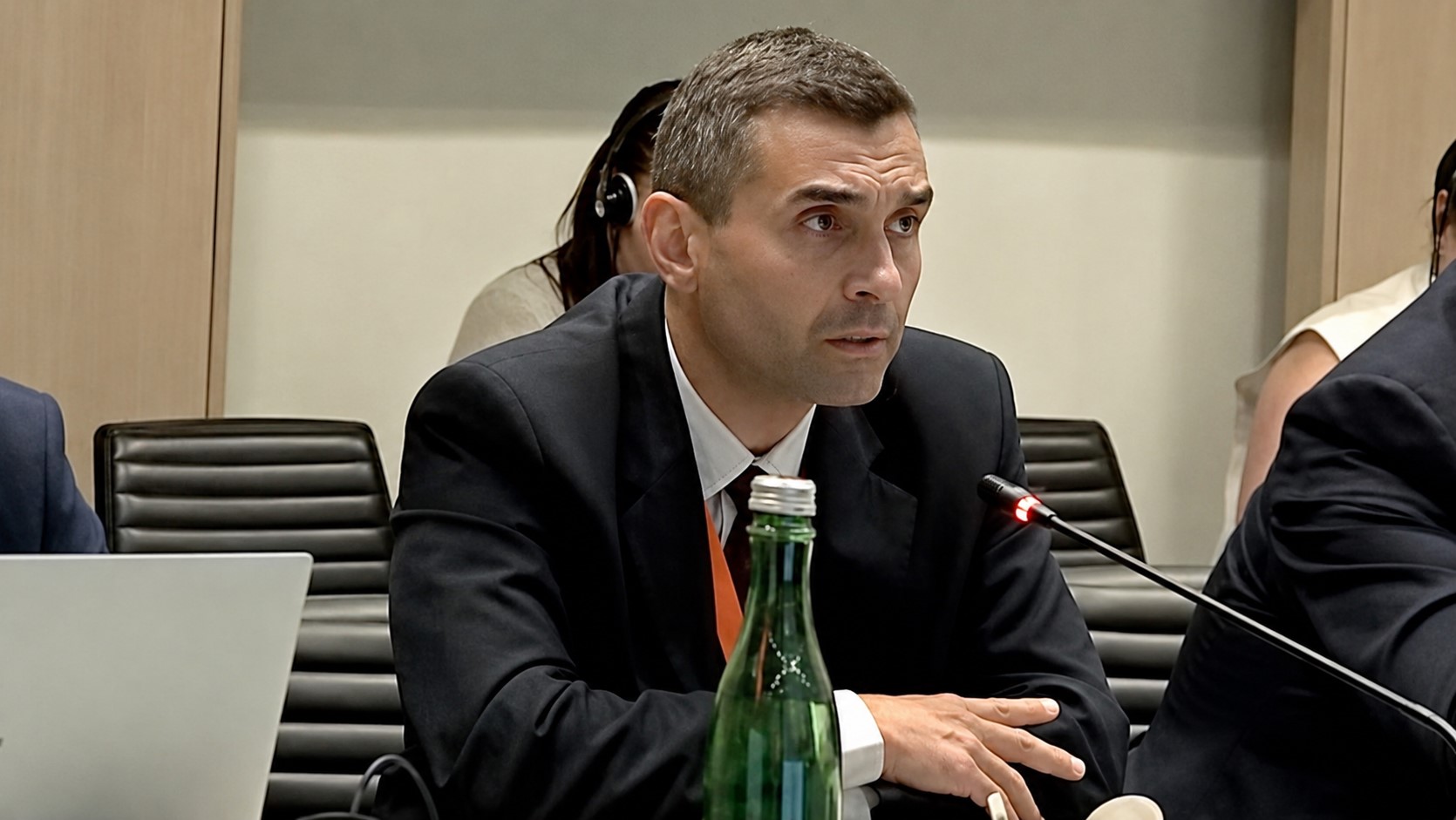
Vladimir Ivanov speaking at the OSCE plenary session in Vienna
ALLATRA GRC believes that effective prevention of human rights violations requires attention both to actual abuse and to earlier conditions that can make abuse foreseeable: repeated dehumanization, coordinated reputational attacks, barriers to equal participation, and erosion of public empathy toward targeted individuals or groups.
ALLATRA GRC thanks the speakers, participants, and organizers who contributed to this exchange. The center will continue to support research, dialogue, and preventive approaches that uphold human dignity, equal protection under the law, and a safe environment for civil society across the OSCE region.
About ALLATRA
ALLATRA is an international organization with a research center in the United States (ALLATRA Global Research Center), engaged in the comprehensive analysis of climate and environmental changes, the study of the impact of micro- and nanoplastics, and the promotion of intercultural cooperation and the protection of fundamental human rights and freedoms.
In recognition of its commitment to environmental protection and preservation of creation, ALLATRA received an Apostolic Blessing from His Holiness Pope Francis in 2024. In 2025, His Holiness Pope Leo XIV likewise bestowed an Apostolic Blessing upon the President of ALLATRA and all its volunteers.
For media inquiries, please email us at [email protected]