

ALLATRA Global Research Center Presents the Inaugural Issue of ALLATRA Natural Science Review
The inaugural issue, Natural Science in an Age of Planetary Change, brings together research and analytical materials on micro- and nanoplastics, geodynamics, natural hazards, climate processes, immunology, quantum technologies, artificial intelligence, and the state of the world’s oceans.
ATLANTA, Georgia, USA — August 17, 2026. ALLATRA Global Research Center (ALLATRA GRC) presents the inaugural issue of ALLATRA Natural Science Review, a new quarterly interdisciplinary publication created to provide systematic coverage of advances in the natural sciences and their significance for public health, environmental and climate security, infrastructure resilience, public policy, and long-term decision-making.
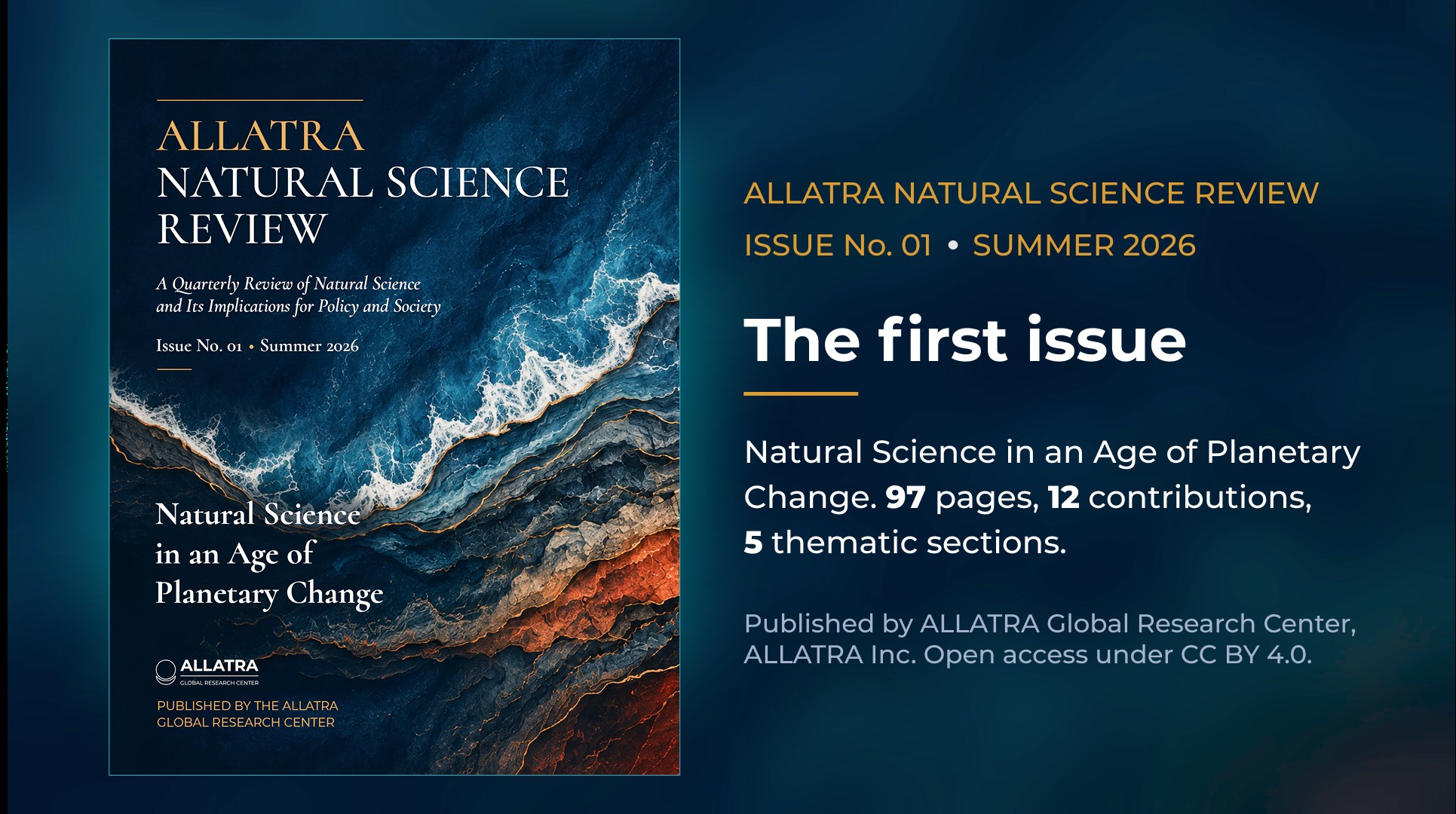
The first issue is titled Natural Science in an Age of Planetary Change. The 97-page publication features scientific and analytical articles, expert reviews, and interviews covering a broad range of topics, from the presence of micro- and nanoplastics in the human body and new methods for detecting them to earthquake mechanisms, the thermal state of the ocean, immune system function, and the growing role of neural networks in scientific research.
Science as a Foundation for Understanding Ongoing Change
ALLATRA Natural Science Review was created in response to the growing gap between the pace of scientific advancement and the extent to which scientific knowledge is reflected in public and institutional discourse. Research findings with direct relevance to public health, natural hazard preparedness, and environmental policy often remain confined to specialized academic circles and do not always become part of the information base used in decision-making.
The Review aims to narrow this gap by placing complex scientific findings in a clear, accurate, and substantive context without oversimplifying them to the point that their scientific significance is lost. The publication is intended for researchers, engineers, physicians, educators, and specialists in related fields, as well as government and public institutions, decision-makers, and an informed general audience.
As the journal’s Editor-in-Chief, John Ahn, Ph.D., MBA, notes, the editorial team’s goal is to make complex science accessible while preserving its essential depth and nuance, and to create a space for substantive scientific discussion as long as that discussion remains evidence-based.
Editorial Board
The Editor-in-Chief of ALLATRA Natural Science Review is John Ahn, Ph.D., MBA, Chief Scientist and Chair of ALLATRA Global Research Center. He earned his Ph.D. in Chemical Engineering from the Technical University of Munich, an M.S. from the University of California, Berkeley, and an MBA from INSEAD. His work focuses on applying quantitative methods, computational analysis, and interdisciplinary data to the study of complex natural systems, geodynamics, seismicity, and natural hazards.
The journal’s Scientific Editor is Anastasiya Pashigreva, Ph.D., a chemist and interdisciplinary researcher specializing in sustainable technologies, environmental systems, and climate processes. At various stages of her professional career, she has worked at the University of Oxford, the Technical University of Munich, DuPont, and Bayer.
The Editorial Board also includes Karolína Hronová, MUDr., Ph.D., a clinical pharmacologist; Jan Kára, Ph.D., Senior Systems Architect and Linux kernel developer; Andrea Lešková, Ph.D., a specialist in landscape science and environmental planning; and Alexander Masny, MSc., a biochemist and bioinformatician.
The Inaugural Issue: From the Prenatal Environment to Global Earth Systems
The inaugural issue is organized around several interconnected themes: micro- and nanoplastics and their potential biological consequences; dynamic Earth processes and natural hazards; fundamental and emerging scientific methods; and the role of the ocean as a key component of the planetary system.
The issue includes:
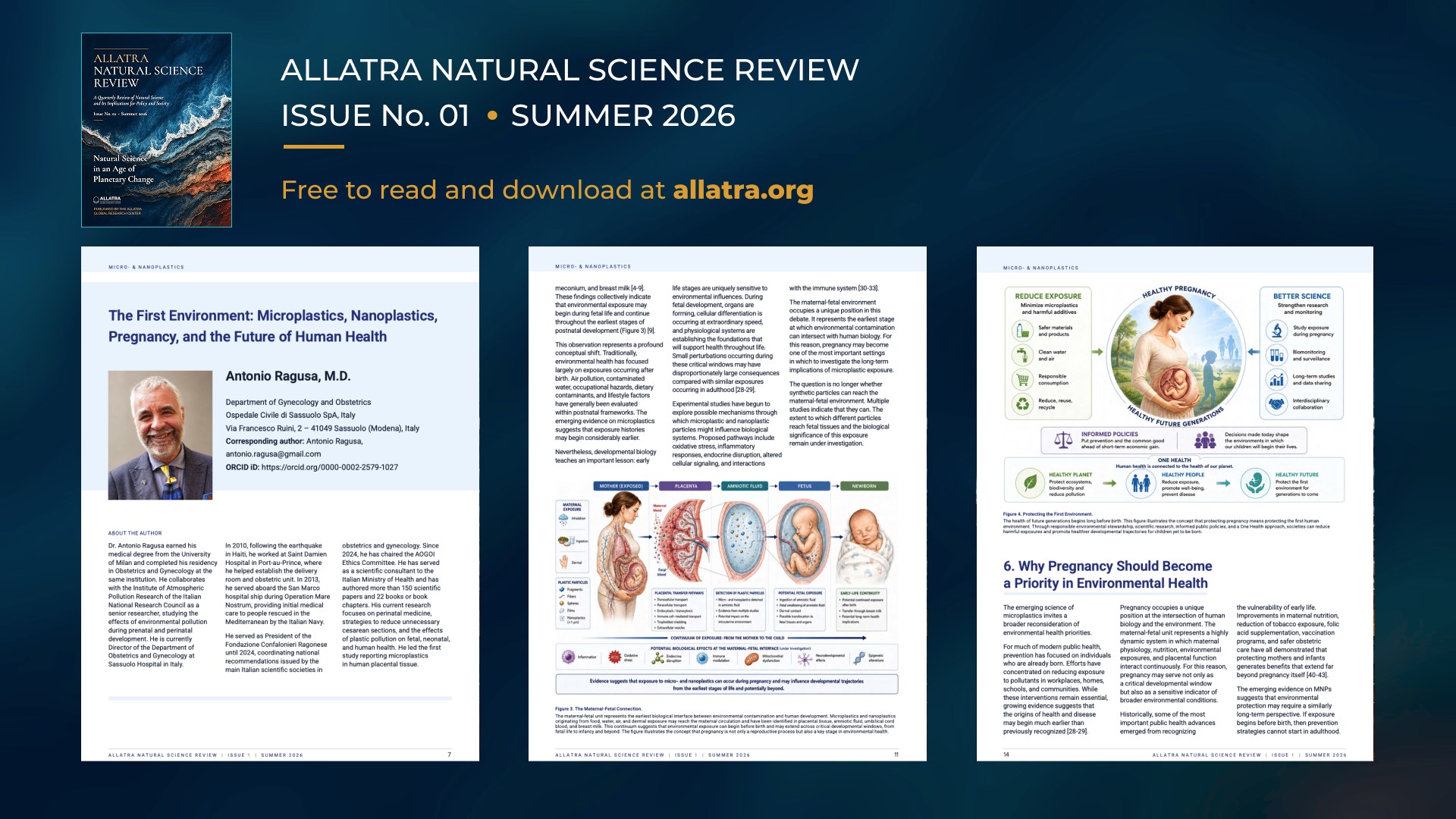
- “The First Environment: Microplastics, Nanoplastics, Pregnancy, and the Future of Human Health” — Antonio Ragusa, M.D. Dr. Antonio Ragusa is Director of the Department of Obstetrics and Gynecology at Sassuolo Hospital in Italy and a researcher studying the effects of environmental pollution on prenatal and perinatal development. He is the author of more than 150 scientific publications and 22 books and book chapters, and he led the first study to report the detection of microplastics in human placental tissue. His article examines pregnancy as the earliest stage of human interaction with the environment and reviews evidence of micro- and nanoplastics in the placenta, amniotic fluid, umbilical cord blood, and breast milk, as well as unresolved questions about the potential long-term consequences of such exposure.
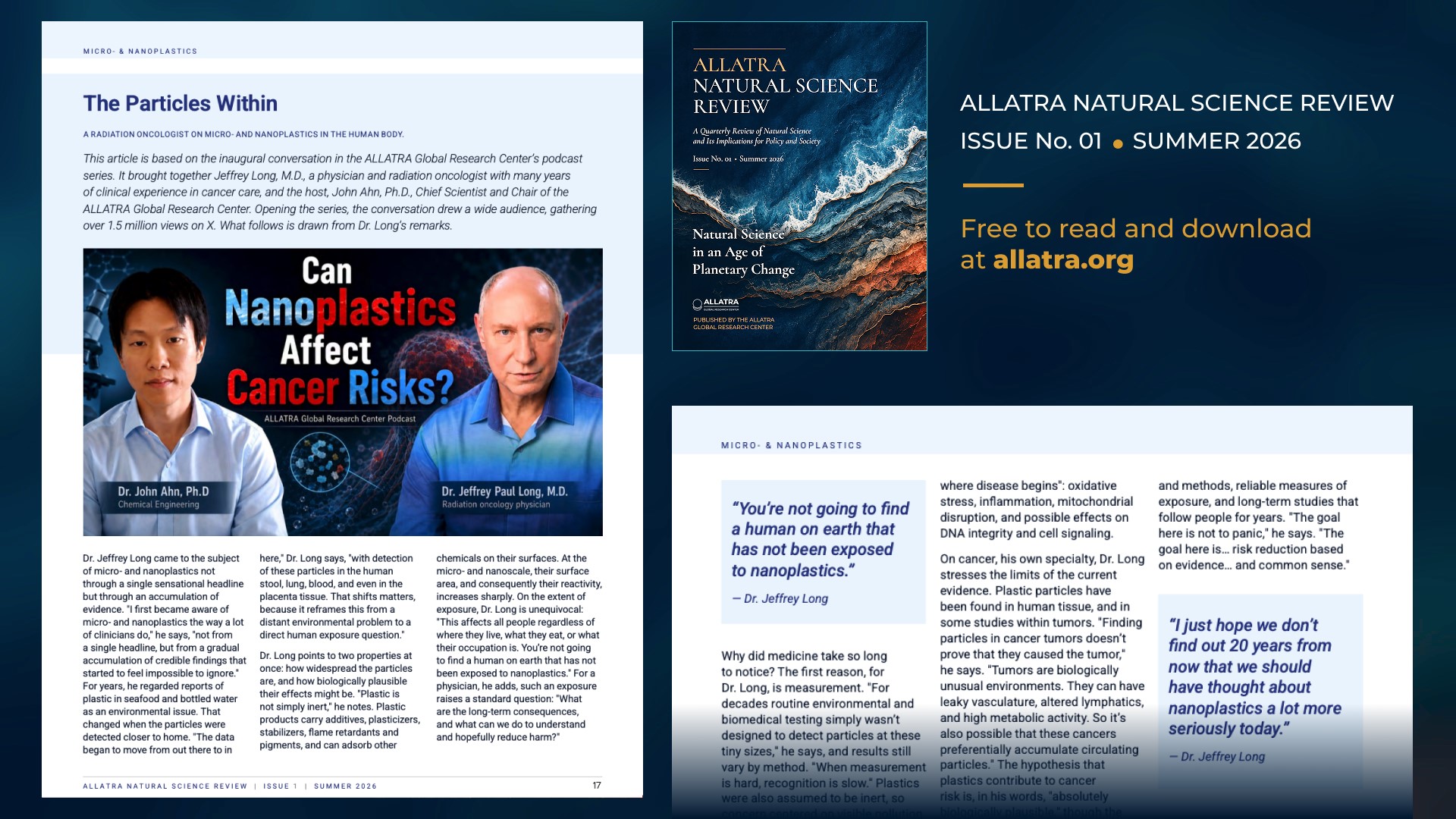
- “The Particles Within” — a conversation with Jeffrey Long, M.D. A physician and radiation oncologist with many years of clinical experience in cancer care, Dr. Long examines the issue of micro- and nanoplastics from the perspective of clinical medicine. The article distinguishes between findings that are already established, including the detection of particles in various human tissues, and hypotheses that remain under investigation concerning inflammation, oxidative stress, interactions with biological barriers, and the possible role of such processes in disease development.
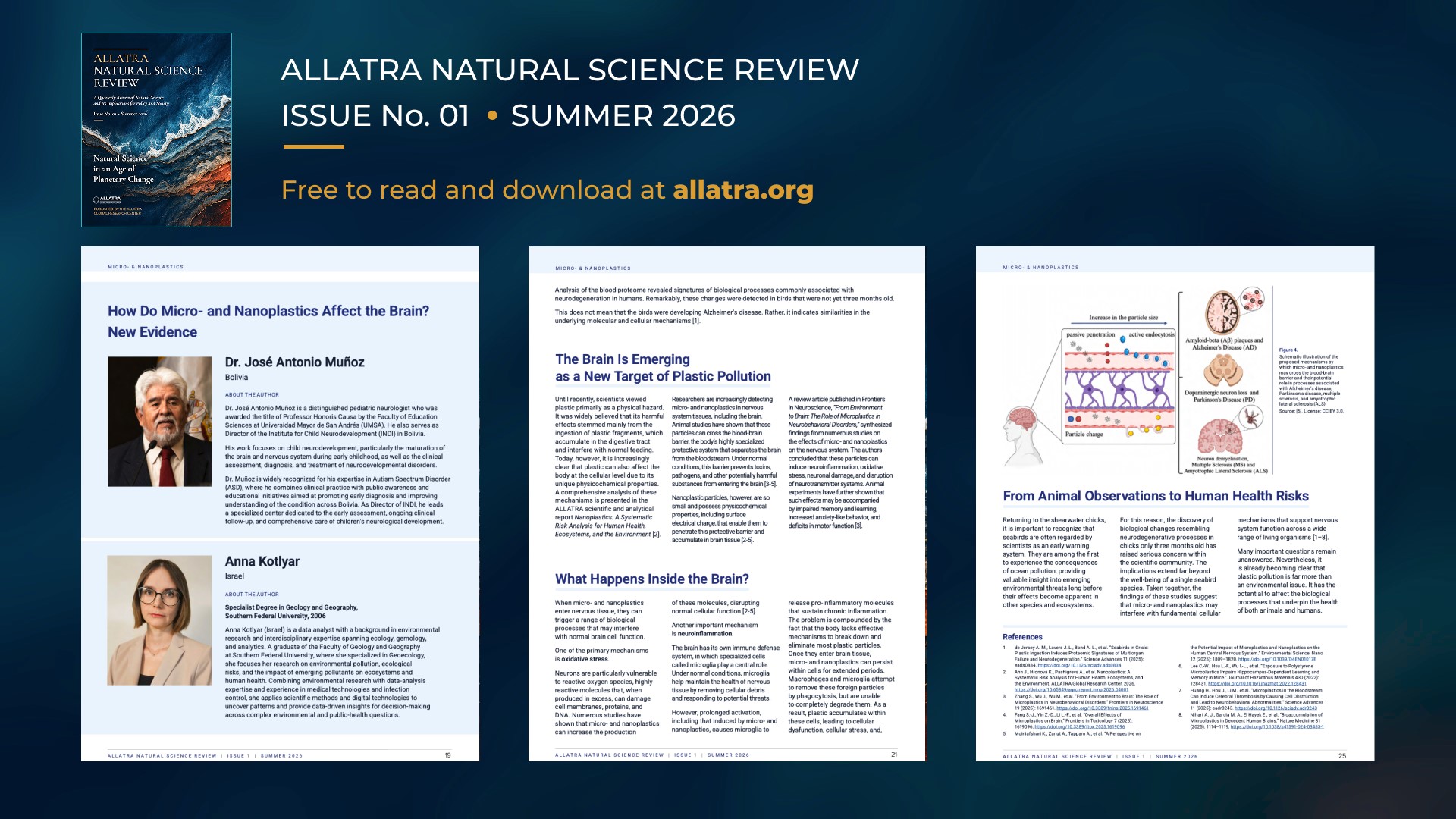
- “How Do Micro- and Nanoplastics Affect the Brain? New Evidence” — José Antonio Muñoz and Anna Kotlyar. Dr. José Antonio Muñoz is a specialist in pediatric neurology and neurodevelopment, a recipient of the title Professor Honoris Causa from the Faculty of Educational Sciences at Universidad Mayor de San Andrés, and head of the Institute for Child Neurodevelopment in Bolivia. Anna Kotlyar is a geoecologist and data analyst working at the intersection of environmental research, analytics, and public health. The authors examine new experimental evidence on the effects of micro- and nanoplastics on the nervous system, from changes observed in young seabirds to studies of particles in human brain tissue. They also discuss potential mechanisms involving neuroinflammation, oxidative stress, mitochondrial dysfunction, and disruption of neuronal communication.
- “Light from the Crystal’s Darkness: When Diamonds Trace Invisible Plastics” — Tatiana Kárová, M.S. The author was trained in nuclear and subnuclear physics at Charles University in Prague. The article brings the issue of nanoplastics into the realm of quantum physics and examines the potential use of nitrogen-vacancy centers in synthetic diamonds to detect particles whose size lies beyond the capabilities of many conventional optical methods. It provides a detailed discussion of the principles of ODMR and nanoscale NMR, existing experimental advances, and engineering limitations. The author emphasizes that a direct, chemically specific nanoplastics detector based on this technology remains a research objective rather than a ready-to-use tool.
- “Thirty-Nine Seconds: Insights from the 2026 Venezuela Earthquake” — John Ahn, Ph.D., MBA, and Andrea Lešková, Ph.D. The authors analyze an unusual seismic sequence in northern Venezuela, where two strong pulses occurred less than 40 seconds apart. The article examines competing interpretations of the event, either as two separate earthquakes or as a single complex rupture, as well as mechanisms of stress transfer between fault segments, rupture directivity, characteristics of the aftershock sequence, and the implications of such cascading scenarios for modern seismic hazard models. A separate conclusion emphasizes that the scale of human losses is determined not only by magnitude but also by the vulnerability of the built environment, ground conditions, the quality of monitoring, and infrastructure preparedness.
- “The Ocean Is Storing Heat: Why 2026 Could Bring One of the Strongest El Niños on Record” — Anastasiya Pashigreva, Ph.D. A chemist and researcher of climate and environmental systems, Dr. Pashigreva analyzes the development of the 2026 El Niño through the state of the upper Pacific Ocean, the distribution of subsurface heat, Kelvin waves, changes in the trade winds, and international forecast models.
- “Kamchatka’s 2025 Mega-Earthquake in Global Context” — N. Albridge. The author is a geophysicist with more than 12 years of professional experience and university teaching experience. The editorial team has verified the author’s identity, qualifications, and professional background, but the name and affiliation are not disclosed for security reasons. The article examines the Mw 8.8 Kamchatka earthquake in comparison with the largest megathrust earthquakes of the modern era.
- “Why Do Plastics Easily Acquire Electrostatic Charge and Wood Does Not?” — Jan Kára, Ph.D. Dr. Kára earned his Ph.D. in discrete models and algorithms from Charles University and currently works on Linux kernel development. The article examines the fundamental, still not fully resolved, question of contact electrification. The author explains current understanding of mosaic surface-charge distributions, mechanochemical bond breaking, the roles of radicals and ions, and experimental evidence pointing to lignin as one of the factors behind the natural antistatic properties of wood.
- “The Immune System’s First Teacher: How the Thymus Shapes Health Throughout Life” — Rinat Akhmetzakirov, M.D. A radiologist of the highest qualification category specializing in radiography, CT, MRI, ultrasound, and nuclear diagnostics, Dr. Akhmetzakirov works at the National Scientific Center of Traumatology and Orthopedics named after Academician N.D. Batpenov in Astana. The article focuses on the thymus and current research into its regenerative potential.
- “The Integration of Neural Networks as Tools in Scientific Research” — Taliy Shkurupiy, M.A.M. The author is an IT specialist with experience in Silicon Valley’s high-tech industry and a global systems analyst specializing in OSINT, digital research, and data analysis. He holds C|OSINT certification. The article traces the development of neural networks from Claude Shannon’s information theory and early machine learning to AlphaFold2, GraphCast, and modern methods for discovering new materials. It examines whether algorithms can help scientists identify the very variables and structures through which a complex system becomes scientifically describable.
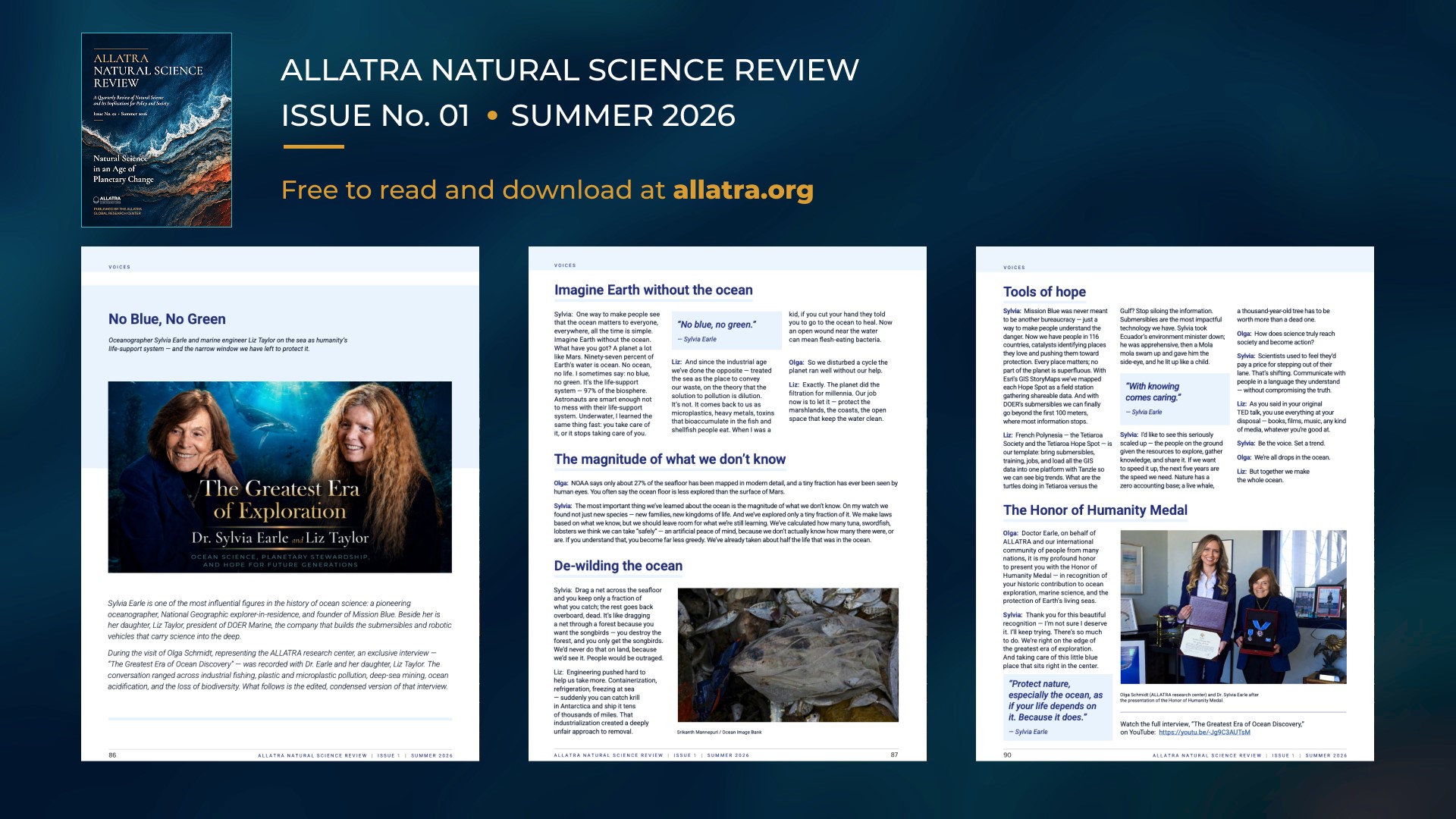
- “No Blue, No Green” — an interview with Sylvia Earle and Liz Taylor. Dr. Sylvia Earle is a pioneer in oceanography, a National Geographic Explorer-in-Residence, and the founder of Mission Blue, as well as one of the most influential figures in modern ocean science. Liz Taylor heads DOER Marine, which develops submersibles for deep-sea exploration. The central theme of the conversation is the ocean as a planetary life-support system and the need to connect scientific knowledge with practical solutions for its protection.
The issue concludes with a chronicle of the scientific work of ALLATRA Global Research Center, including international conferences and expert events, research on micro- and nanoplastics, collaboration on natural hazard management, and presentations of the Center’s scientific and analytical materials.
ALLATRA Natural Science Review Invites Authors to Contribute
The editorial team welcomes new scientific and expert materials and invites authors to collaborate and submit their work for publication.
ALLATRA Natural Science Review is published quarterly in digital format. The publication does not carry advertising or sponsored content and does not charge authors submission or publication fees.
More detailed information on submission criteria is available here.
Topic proposals and materials for consideration may be sent to the editorial team at: [email protected].
About ALLATRA Global Research Center
ALLATRA Global Research Center brings together scientists, researchers, and specialists from different countries to study global challenges, including natural disasters, geodynamic changes, micro- and nanoplastics, and human rights. The Center publishes science-based analyses and recommendations for researchers, policymakers, the media, and the public.
For media inquiries, please email us at [email protected]