

ALLATRA GLOBAL RESEARCH CENTER PRESENTS
NANOPLASTICS
THREAT TO LIFE
An Invisible Extinction: How micro- and nanoplastics penetrate every organ, disrupt the impulse of life, and threaten all living systems.
WATCH DOCUMENTARY

Awards
Awards Won by the Film NANOPLASTICS THREAT TO LIFE
at International Film Festivals









About the Documentary
Presented by ALLATRA Global Research Center, this research-based documentary brings together global scientific evidence on the potential impact of micro- and nanoplastics and presents it in an accessible, popular science format.

The film reveals how micro and nanoplastics have infiltrated every corner of the planet and can enter organs of the human body, including the brain, heart, bloodstream, and under certain conditions can even interfere with the beginning of life itself.

This research examines the potential impact of electrostatically charged nanoplastics on cellular communication and analyzes data pointing to its possible association with aging processes, oncogenesis, immune system alterations, reproductive health disorders, and ecosystem status.
This film, created in collaboration with world-renowned scientists, explores a broad range of issues surrounding micro- and nanoplastics. The authors examine current scientific data on the potential risks these particles can pose to human health and the environment, while discussing the potential long-term consequences for present and future generations.
Visualizing Potential Damage Caused by Nanoplastics
The film features original scientific animations that visualize the mechanisms discussed in scientific literature regarding the potential impact of nanoplastics on cellular processes, including their possible interaction with ion channels, mitochondria, neurotransmitter systems, and DNA.

According to a number of studies, micro- and nanoplastics have been detected in various human tissues and organs, including the brain, intestines, heart muscle, as well as endocrine and reproductive organs.
From the film Nanoplastics. A Threat to Life
Featured Experts
Voices of Science

Prof. Sarju Ganatra, MD (USA)
Cardio-Oncologist; Director, Cardio-Oncology Program; Medical Director of Sustainability, Lahey Hospital & Medical Center; Founder, Sustain Health Solutions

Prof. Lukas Kenner, MD (Austria)
Pathologist & Cancer Researcher, Medical University of Vienna; Director, Christian Doppler Institute for Applied Metabolomics; Scientific Director, microONE Project

Prof. Antonio Ragusa, MD (Italy)
Obstetrician & Gynecologist
MD, Obstetrics Department Sassuolo hospital S.p.A., Modena, Italy

Dr. Jeffrey P. Long, MD (USA)
Radiation Oncologist, Expert in Human Health Impacts of Environmental Factors

Prof. Valeriy A. Etkin (Israel)
Founder & Director, Institute of Integrative Studies; Member of the European Academy of Natural Sciences; Expert and Leader in Thermodynamics, Bioenergetics, and Physics Research

Dr. Dušan Materic (Germany)
Environmental Analytical Scientist; Head of Microplastics, Nanoplastics & Elements Research Group, Helmholtz Centre for Environmental Research

Dr. Elke Ludewig (Austria)
Head of the Sonnblick Observatory; Head of the European Centre for Cloud Ambient Intercomparison (ECCINT); Expert in Environmental and Climate Research

Prof. Dr. Paul D’Abzac (Bolivia)
Water chemist & microbiologist, Bolivian Catholic University; Coordinator, Center for Research in Exact Sciences and Engineering (CICEI); Lead Scientist, Integrated Water Management Projects; Expert in water properties, pollution dynamics & environmental impacts

Liliana Cáceres Sánchez (Bolivia)
Biologist, Ecotoxicology and Environmental Health; PhD Researcher, Zoology: Biodiversity & Toxicology, Hasselt University. Research area: Micro- and nanoplastics, regeneration, and pollution impacts on human and environmental health

Prof. David Baracchi (Italy)
Professor of Zoology and Ethology, University of Florence; Head, Cognitive & Behavioural Ecology Lab (BeeLab); Pioneer in experimental research on the effects of microplastics on bee health, cognition and social behavior

Film Host
Dr. John Ahn, USA
PhD, MBA
ALLATRA Global Research Center, Scientific Advisory & Research Council
 MBA, INSEAD, France, 2017
 PhD in Chemical Engineering, TU München, Germany, 2013
MS in Chemical Engineering, UC Berkeley, USA, 2008
BSc in Chemical Engineering, Penn State, USA, 2006
John Ahn, PhD, MBA, is a distinguished professional recognized for building pathways between cutting-edge research and commercial impact. With multidisciplinary expertise in chemistry, life sciences, engineering, and venture development, Dr. Ahn drives sustainable innovations by translating early-stage discoveries into scalable technologies that address pressing global challenges.
We are entering a pivotal moment in our understanding of nanoplastics. Though still widely overlooked, growing scientific evidence shows that this may be the most consequential environmental and public-health crisis of our time. Through this film, I hope to bring visibility to the true scope of nanoplastic damage, highlight the work of leading scientists, contribute to a constructive global dialogue, and inspire collective efforts to safeguard future generations.
Dr. John Ahn
What Are Nanoplastics?
Nanoplastics are plastic particles smaller than 1 micrometer - about 1/1000th the width of a human hair. These nanoparticles form when larger plastics break down or are manufactured at microscopic scales.

Nanoplastics can cross biological barriers including complex ones such as the blood-brain barrier and placental barrier.

They're found in bottled water, seafood, salt, and even the air we breathe.
Key Topics Explored in the Film
Emergency
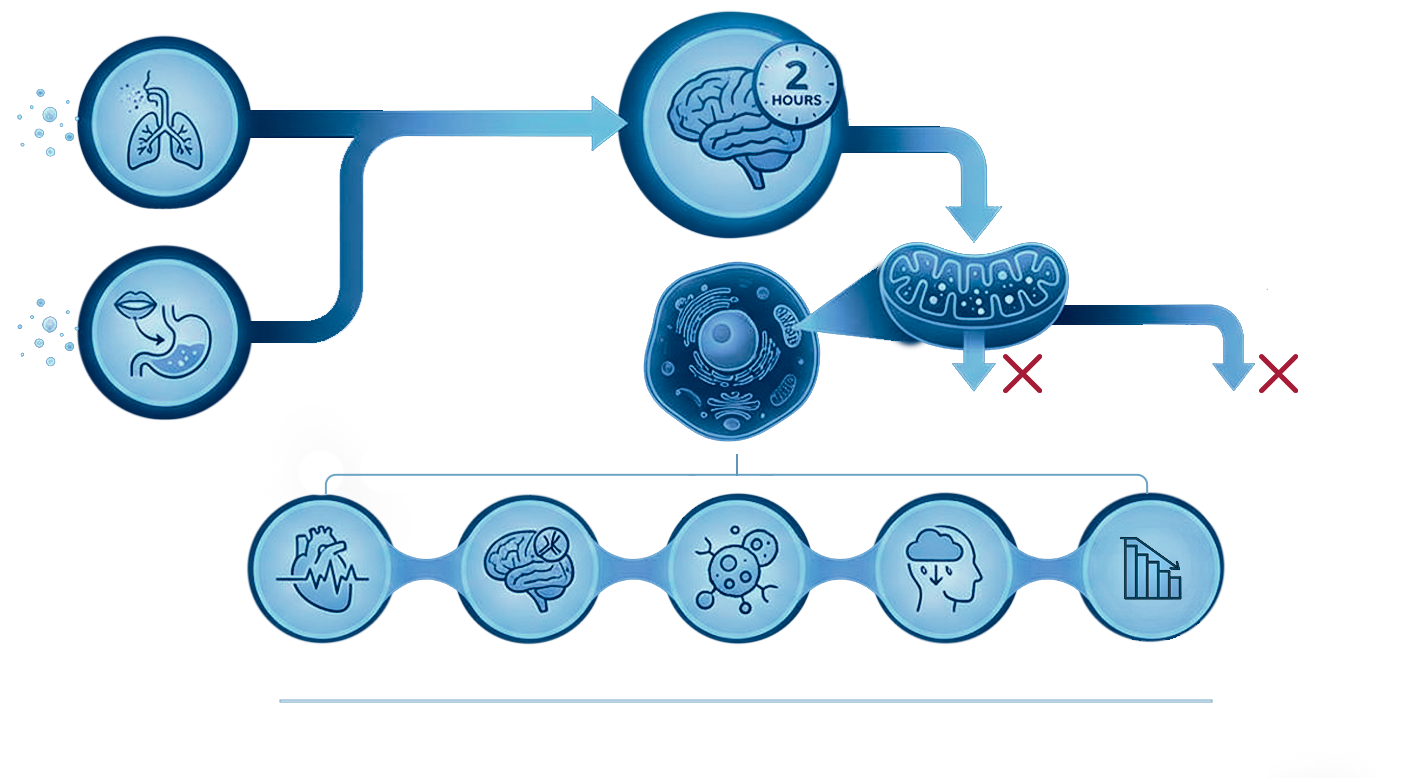
A growing body of research is exploring how nanoplastics interact with cells and body tissues. Researchers are analyzing their possible involvement in cellular disruption, including altered mitochondrial function, inflammatory responses, oxidative stress, and damage to genetic material. These mechanisms are being examined as potential contributing factors to various chronic conditions. The film authors highlight the urgent need for further study into the possible impacts of this exposure on public health and healthcare systems.
Micro- and nanoplastics are constantly infiltrating everything: soil, water, air, and living organisms, already becoming part of the food chain. On average, a person may consume about 250 grams of plastic per year with food alone, and may inhale up to 106,000 plastic particles during just a two-hour walk.
Nanoplastics can bypass biological barriers (including the intestinal barrier, the blood-brain barrier, the placental barrier, etc.) and can accumulate in the brain, heart, blood vessels, liver, testicles, and ovaries. Once inside cells, they may disrupt ion channels, can cause oxidative stress, mitochondrial dysfunction, and chronic inflammation, all of which may potentially have a systemic impact on reproductive health as well as the nervous and cardiovascular systems.
at the Cellular Level
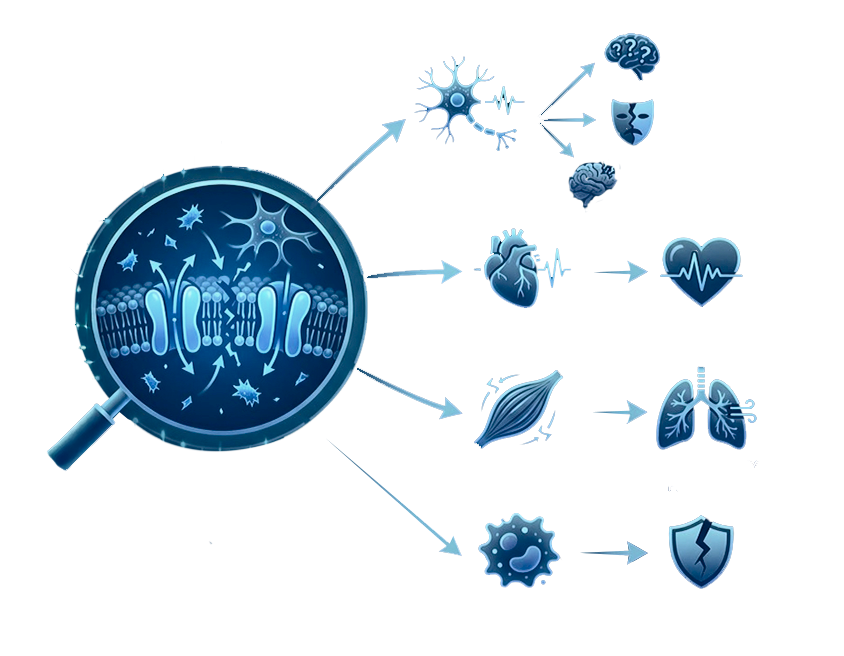
Nanoplastics accumulate and continuously retain an electrostatic charge on their surface, which may distort electrical signals between cells, alter their membrane potential, and disrupt the functioning of ion channels and electron transport in mitochondria.
Such interference may potentially lead to cardiac arrhythmia, metabolic disorders, and cognitive decline.
Electrostatically charged nanoplastics can disrupt the transmission of nerve impulses, which may lead to disturbances in heart rhythm, muscle contractions, immune responses, and metabolism. This may result in arrhythmias, respiratory failure, cognitive impairment, and accelerated neurodegeneration.
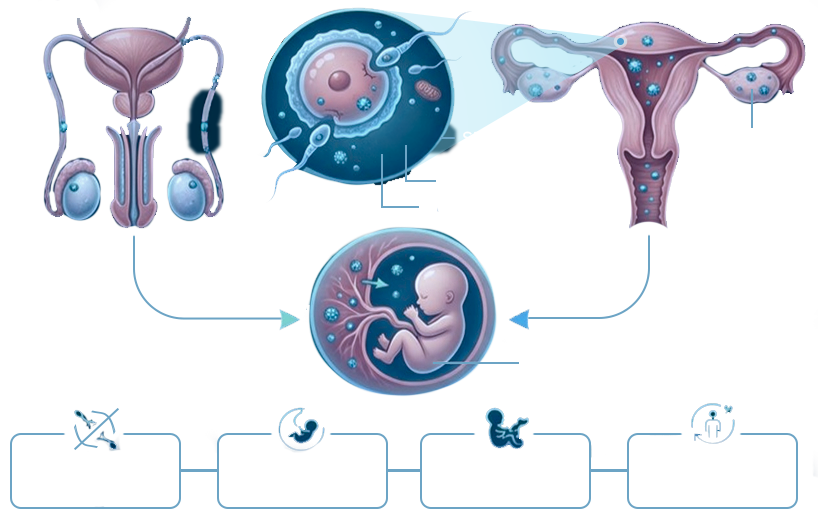
A growing body of studies is focusing on the potential impact of micro- and nanoplastics on reproductive health. Researchers are analyzing evidence of their presence in reproductive organs, their potential effects on germ cells, and their ability to cross the placental barrier. These mechanisms are examined as potential risk factors for adverse pregnancy outcomes and fetal developmental disorders.
An increasing number of studies investigate how nanoplastics might affect the central nervous system. Researchers are evaluating their potential impact on neuronal operation, neurotransmitter systems, and mitochondria, as well as their role in driving inflammatory processes in the brain. These mechanisms are considered to be potential contributing factors to an increased risk of developing a range of neurological and neuropsychiatric conditions, including depression, anxiety disorders, attention-deficit/hyperactivity disorder (ADHD), Alzheimer’s disease, Parkinson’s disease, and epilepsy.
Nanoplastics can impair animal navigation (birds), electroreception (fish), and pollinator communication (bees), while possibly damaging plant roots and nutrient uptake. This could lead to ecosystem degradation and population decline.
Amplification
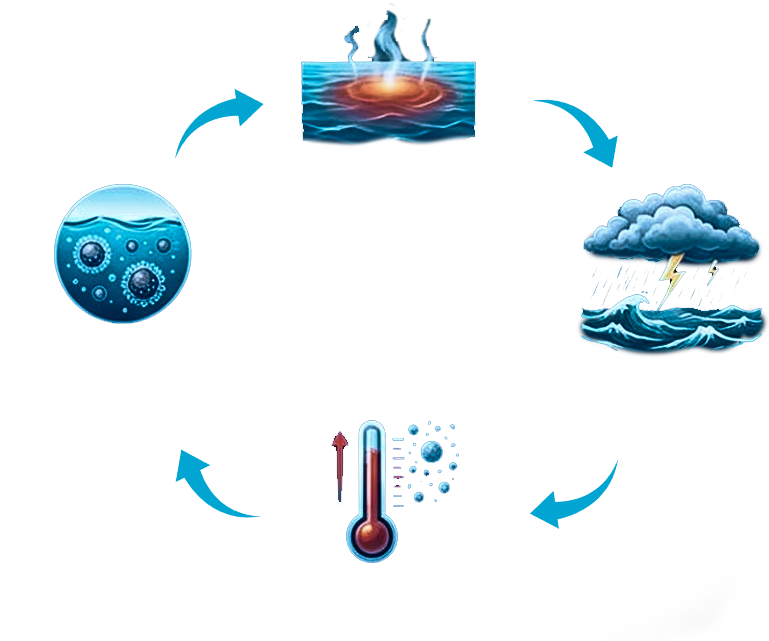
A growing body of research focuses on the potential role of micro- and nanoplastics in the Earth’s climate system. Researchers are analyzing their possible impact on cloud formation, precipitation, and ocean-atmosphere interactions. A number of researchers suggest that these processes could further contribute to changing climate conditions and the severity of certain extreme weather events.
The scale of micro- and nanoplastics spread, along with its wide range of potential impacts — from embryonic development to the state of ecosystems — make international scientific cooperation particularly crucial. Addressing this complex interdisciplinary challenge will clearly require coordinated efforts from researchers, the medical community, environmental organizations, and government institutions worldwide.

About ALLATRA Global Research Center
The ALLATRA Global Research Center is an international research think tank that addresses critical planetary challenges through rigorous scientific analysis, comprehensive risk assessment, and evidence-based policy recommendations.
Operating under the legal framework of ALLATRA USA, a 501(c)(3) nonprofit organization, the center conducts multidisciplinary research in natural disaster dynamics, climate and geophysical risks, the ecological and health impacts of micro- and nanoplastics, and global human rights and intercultural cooperation.
ALLATRA GRC’s work integrates scientific inquiry with strategic and operational guidance to support informed decision-making at the global level.
Read more