

Nanoplastics: A Growing Threat to Human Health and Climate Stability. High-Level Conference at the European Parliament
Brussels, February 2026
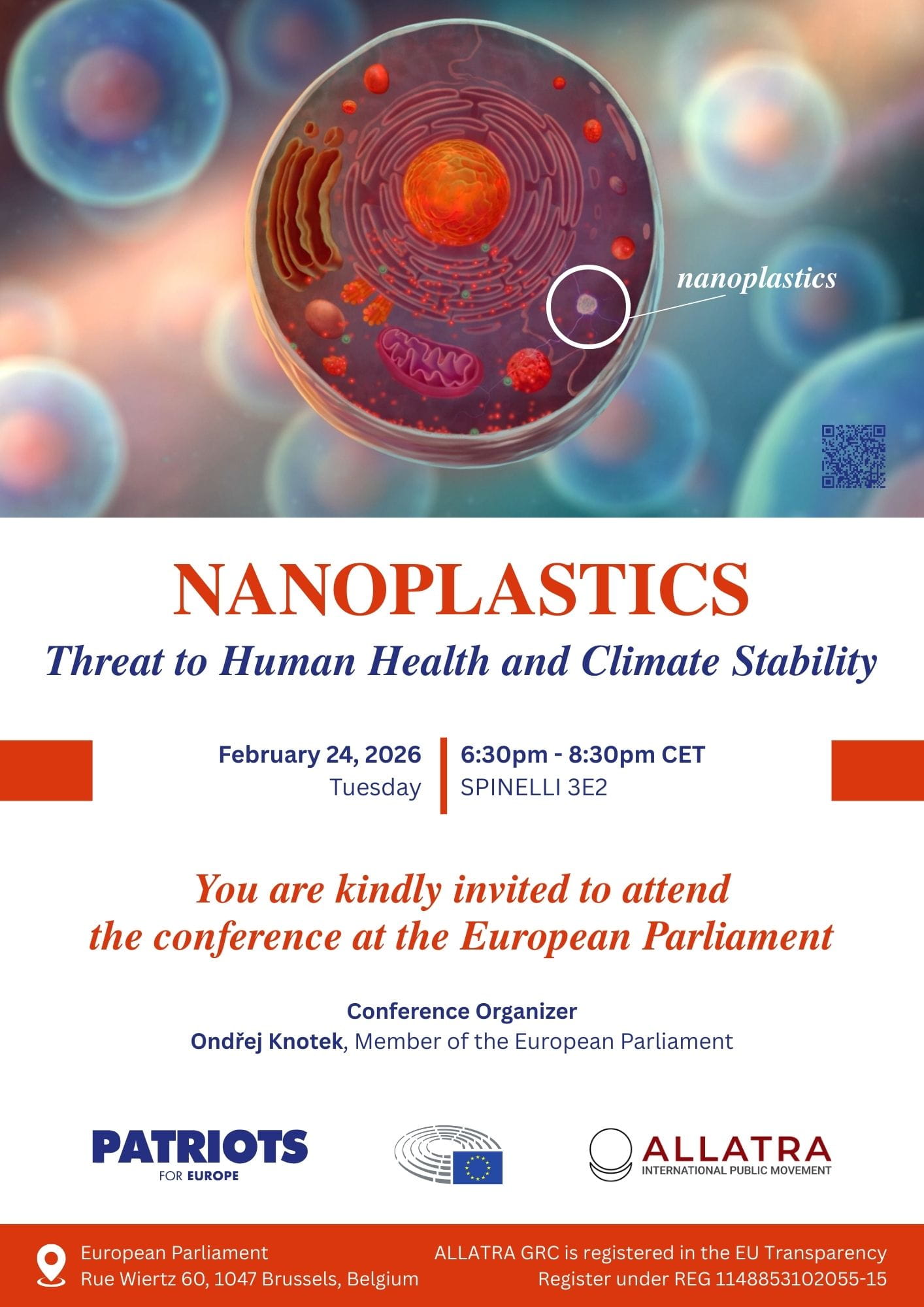
A high-level international conference titled “Nanoplastics: Hidden Connections and Emerging Risks” will take place on February 24, 2026, at the European Parliament in Brussels. The event will bring together leading experts from science, medicine, and public policy to address the rapidly emerging risks posed by nanoplastics to human health, ecosystems, and climate stability.
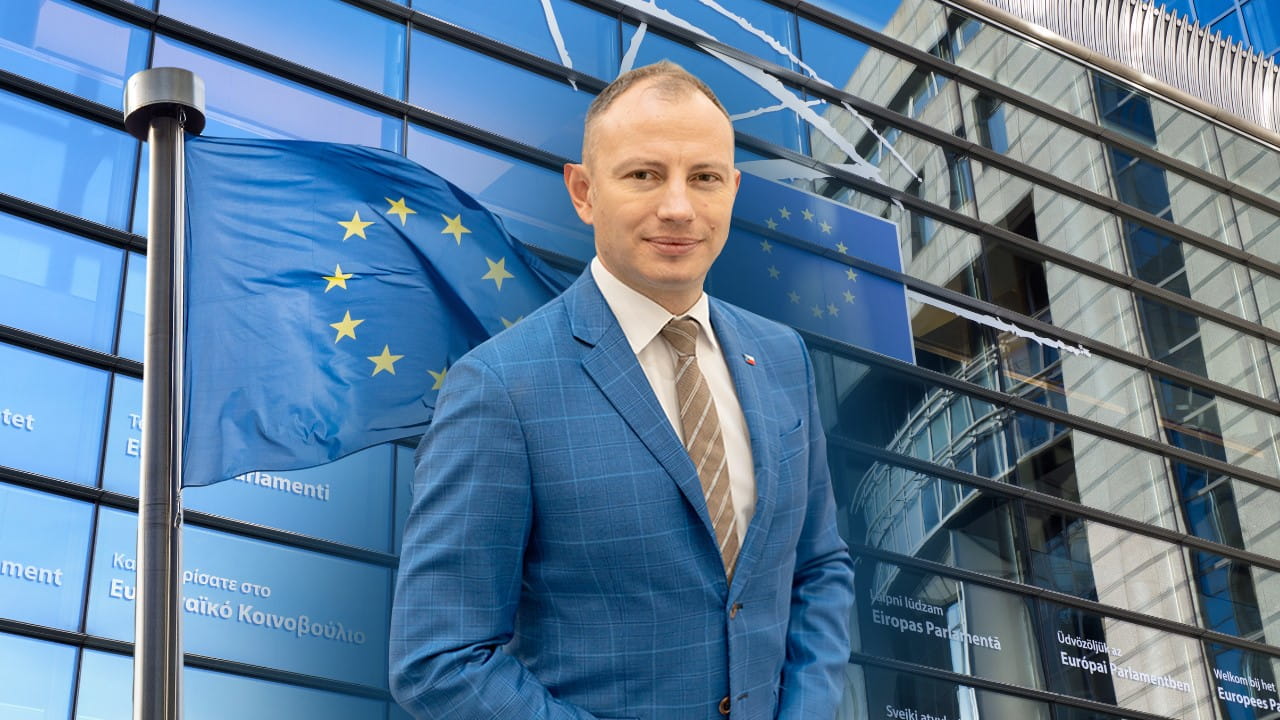
The conference is organized by Ondřej Knotek, Member of the European Parliament (Patriots of Europe), with the cooperation of the ALLATRA Global Research Center (ALLATRA GRC), an international research think tank focused on planetary risks, systemic environmental challenges, and human rights and freedoms.
The conference will run on February 24 from 6:30 pm to 8:30 pm CET at the European Parliament, Rue Wiertz 60, Brussels. Pre-registration is required. For participation, please use the contact details below.
Nanoplastics: Invisible Pollution with Systemic Impacts
Nanoplastics are plastic particles smaller than 1 micrometer that are now pervasive throughout the global environment. They have been detected in air, water, soil, marine ecosystems, food chains, and, increasingly, within the human body. Recent studies have identified nanoplastics in vital human organs, raising profound concerns about their long-term effects on human health.
Increased levels of nanoplastics have also been detected in the atmosphere and oceans, raising concerns about their impact on ecosystems and climate stability.
Despite their growing presence, nanoplastics remain insufficiently addressed by existing regulatory frameworks and are largely absent from comprehensive climate and Earth-system models.
Beyond Chemical Toxicity: Emerging Scientific Insights
A central focus of the conference will be the unique physical properties of nanoplastics, including electrostatic charge, which allow them to interact with biological systems in ways that extend far beyond conventional chemical toxicity.
Research indicates that nanoplastics can:
- Carry surface charges that enhance cellular uptake and retention
- Penetrate biological barriers, including the blood-brain and placental barriers
- Act as carriers for pathogens and toxic substances
- Induce oxidative stress, mitochondrial dysfunction, and DNA damage
Exposure to nanoplastics has been associated with elevated risks of cancer, neurodegenerative diseases, cardiovascular disorders, immune dysfunction, and reproductive and fertility issues.
Implications for Climate and Earth Systems
Nanoplastics in the atmosphere and oceans influence aerosol dynamics, cloud formation, and heat exchange between the ocean and the atmosphere, affecting weather patterns and precipitation.
When acting alongside natural geodynamic processes such as tectonic activity, mantle convection, and long term geological cycles, they increase vulnerability to climate extremes and natural disasters. Incorporating nanoplastics into climate and Earth system models is essential for effective risk assessment and informed policy decisions.
Interdisciplinary Forum
The conference is designed as a high-level interdisciplinary platform, bringing together experts and stakeholders from a wide range of fields, including:
- Medicine and public health
- Environmental science and toxicology
- Earth and ocean sciences
- Atmospheric and climate research
- Physics and material science
- Public policy and regulatory affairs
- International diplomacy and national security
This diversity reflects the complex, interconnected nature of nanoplastic-related risks and the necessity of cross-sectoral cooperation.
Distinguished Speakers and Special Guest
Pastor Mark Burns (USA), Chairman of the Spiritual Diplomats initiative and spiritual advisor to President Donald Trump, is a globally recognized Christian leader and international speaker. At the conference, he focuses on raising awareness of nanoplastics and their impact, highlighting the critical need for cross-sector dialogue and global cooperation to address emerging environmental and health risks.
Among confirmed experts is Professor Antonio Ragusa (Italy), obstetrician and gynecologist and the first scientist to identify microplastics in the human placenta, underscoring the direct implications of plastic pollution for human reproduction and development.
Dr. John Ahn, Ph.D., MBA (USA) is an expert in bridging science, technology, and business. He serves as a Scientific Advisor to the ALLATRA Global Research Center, contributing to interdisciplinary research on climate, geodynamics, and environment. As a science communicator, he advances awareness and fosters informed dialogue on emerging global challenges through documentaries and presentations at governmental and international levels.
RNDr. Jan Kára, Ph.D. (Czech Republic) is a member of the ALLATRA GRC. He earned his Ph.D. in Discrete Mathematics and Algorithms from Charles University in Prague. In his research and presentations, he focuses on natural disasters, geodynamic changes, and the ecological impacts of plastics on human health, ecosystems, and planetary systems.
Anna Kotlyar (Israel) is an ecologist and data analyst. She was a key member of the scientific team behind the documentary “Nanoplastics: Threat to Life,” contributing her interdisciplinary expertise in ecology and environmental research. Her work focuses on the ecological impacts of plastics on human health, ecosystems, and planetary systems, as well as natural disasters and geodynamic changes.
Alexander Masny (Germany) holds an MSc in Bioinformatics and a background in Biochemistry, including authorship of research published in Nature. Currently an expert at the ALLATRA GRC, he specializes in geodynamics, natural disasters, and the ecological impact of nano- and microplastics. In this capacity, he has participated in UN Climate Conferences SB62 (Bonn) and COP30 (Belém) and has conducted interviews with leading international scientists.
Maryna Ovtsynova (USA) is President of the ALLATRA International Public Movement and a global expert in risk and climate strategy, specializing in science, governance, and international cooperation. A Harvard-trained leader in public administration and negotiation, she is recognized for her work in climate diplomacy, security, and human rights.
The Cost of Inaction
Experts warn that failure to address nanoplastics as a systemic risk could lead to escalating environmental damage, rising public health costs, and significant economic losses worldwide. The conference aims to highlight the urgency of proactive, science-based action.
Call to action
The growing prevalence of nanoplastics underscores the urgent need for a pragmatic, science-driven response focused on minimizing harmful impacts.
Current research highlights the importance of better understanding how micro- and nanoplastics interact with biological and environmental systems, and of developing effective strategies to limit their adverse effects on human health, ecosystems, and climate.
Achieving this requires:
- Increasing public and institutional awareness based on rigorous scientific evidence
- Expanding research funding and coordinating international scientific initiatives
- Fostering open, globally inclusive, interdisciplinary collaboration across health, environmental, physical, and Earth sciences
- Developing practical assessment frameworks and technological solutions to support informed decision-making and responsible risk management
Media & Registration Information
Journalists, media representatives, and community leaders are cordially invited to attend the conference, engage with speakers, and contribute to bringing this critical issue to broader public attention.
For full conference details, agenda, and online registration, please visit the official conference website:
https://allatra.org/events/european-parliament-conference
📧 Media and Registration Contact:
[email protected]
About the Organizer
Ing. Ondřej Knotek is a Member of the European Parliament and a member of the Patriots for Europe Group. He focuses on strengthening EU competitiveness, supporting innovation, and promoting a realistic, socially responsible approach to the energy transition. He advocates for science-based policy, international cooperation, and open dialogue on emerging risks to human health, ecosystems, and climate stability.
About the ALLATRA Global Research Center
ALLATRA Global Research Center brings together scientists, researchers, and specialists from different countries to study global challenges, including natural disasters, geodynamic changes, micro- and nanoplastics, and human rights. The Center publishes science-based analyses and recommendations for researchers, policymakers, the media, and the public.
Media & Registration Contact:
📧 [email protected]