

Creative Society Hosts Screening of ALLATRA’s Groundbreaking Documentary “Nanoplastics. Threat to Life”
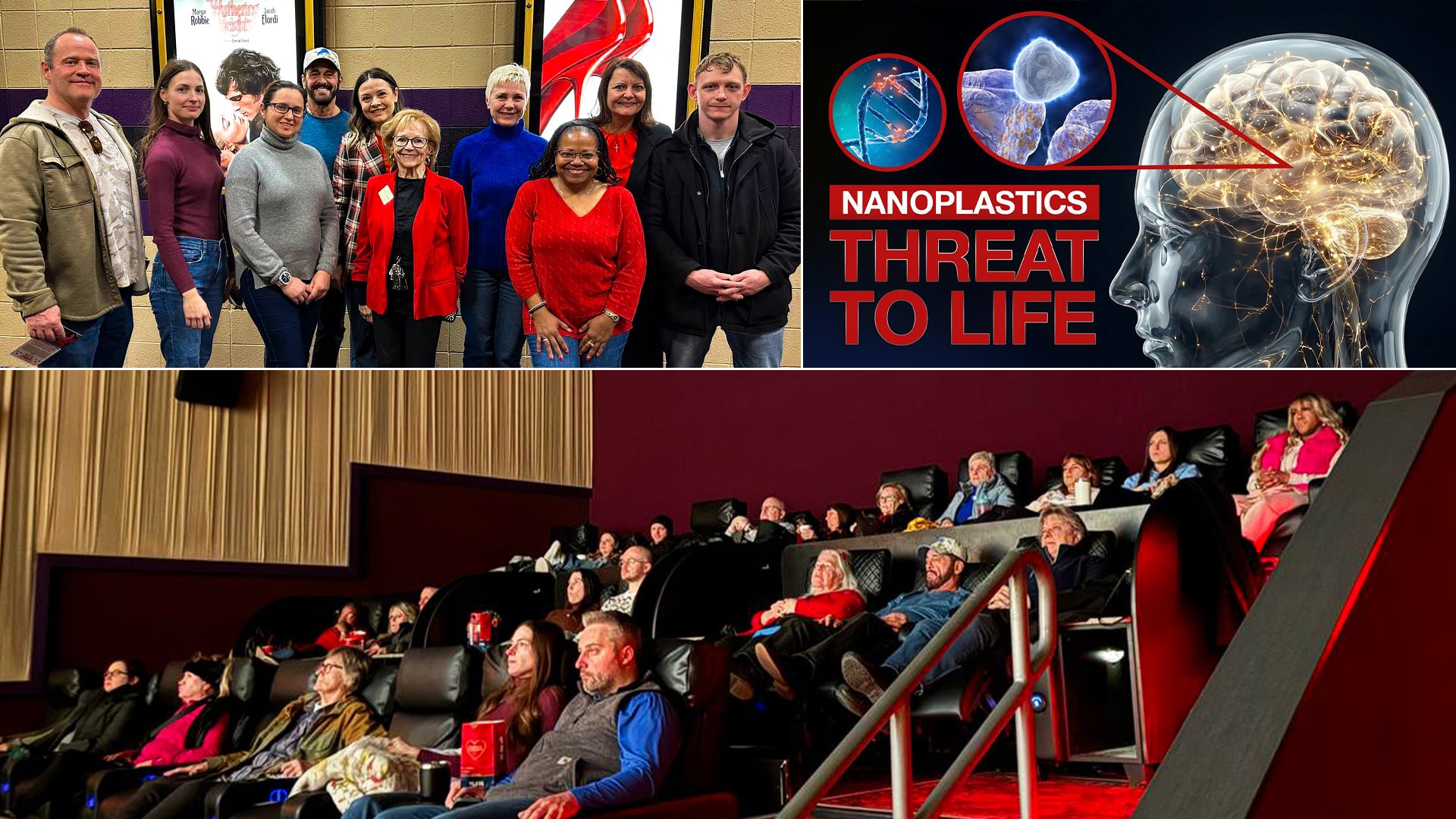
Attendees at the Documentary Screening “Nanoplastics. Threat to Life”
Sterling Heights, MI — December 21, 2025 — A community screening of the documentary "Nanoplastics. Threat to Life" was organized by volunteers of the Creative Society, a partner project of ALLATRA, at MJR Marketplace Cinema in Sterling Heights. The event focused on a growing environmental and public health issue: micro- and nanoplastic pollution and its far-reaching consequences for human health, ecosystems, and the global climate.
The documentary presents scientific findings on the scale and impact of micro- and nanoplastic contamination now present throughout the environment and within the human body. Once seen primarily as a symbol of technological progress, plastic is increasingly understood as a persistent pollutant whose smallest particles can penetrate biological barriers and accumulate in living organisms.
The screening brought together a diverse group of community members and prompted thoughtful discussion following the film. Many attendees expressed surprise at how widespread micro- and nanoplastics have become—detected in the air we breathe, the water we drink, the food we consume, and within human tissues.
“I had no idea how pervasive micro- and nanoplastics are,” said David Schell, a screening attendee. “The film clearly shows how urgent and serious this issue is—not just for people, but for all life.”
Another attendee, Vicki, noted the importance of public awareness, saying, “The documentary highlights how universities around the world are studying micro- and nanoplastics and their impact on human health. This is vital information everyone should learn about.”
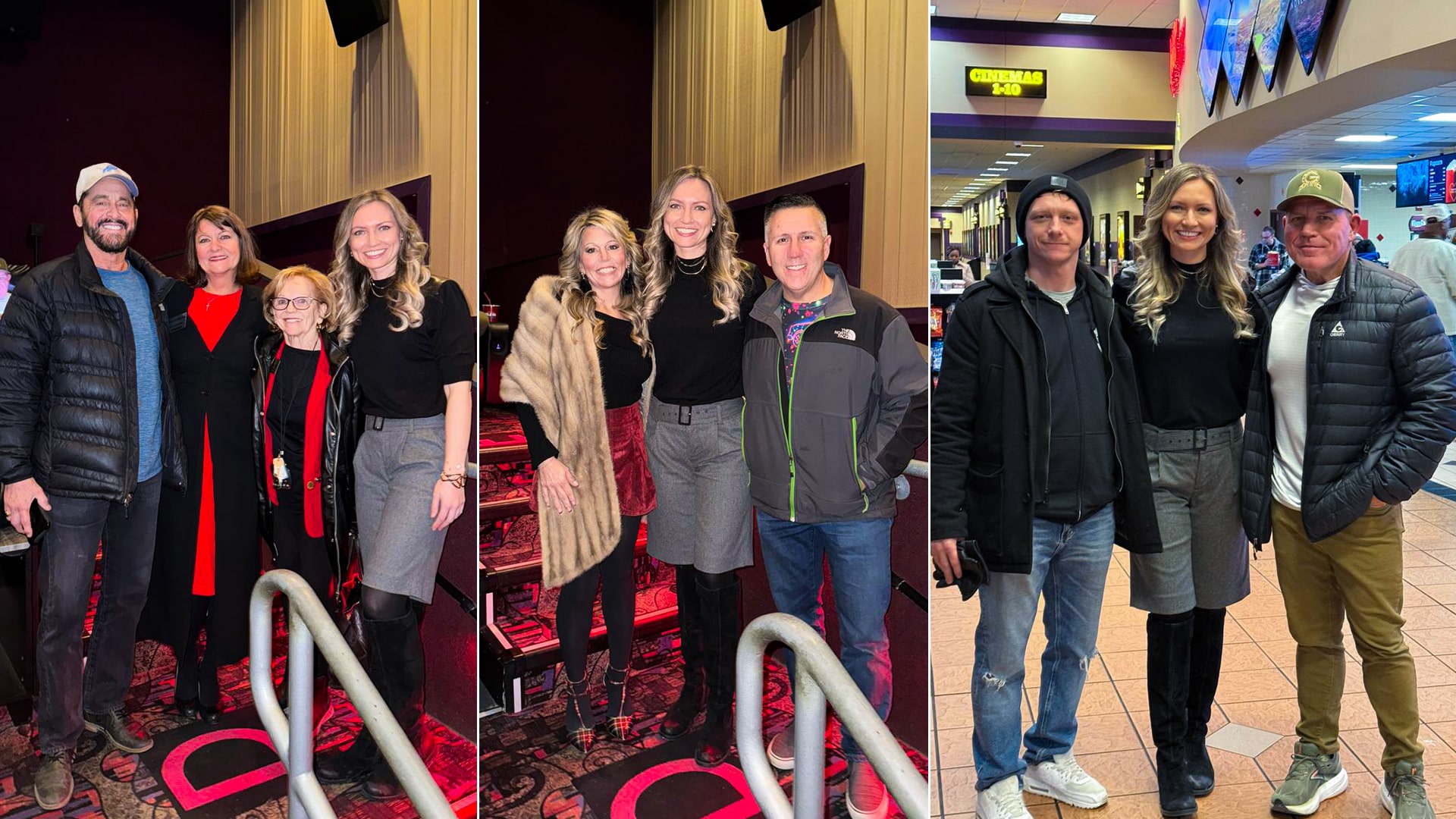
From left to right: David Schell, Genevieve Peters Scott, Lana Mangiapane, Olga Schmidt, Corene Grillo, Larry Grillo, Jason Bell, David Reid.
A particularly striking element of the film for viewers was its examination of recent studies showing that micro- and nanoplastics can accumulate and retain electrostatic charges for long periods of time—a factor rarely explored in public discussions about plastic pollution.
“What really opened my eyes was learning about the electrostatic charge of these particles,” said David Reid, an audience member. “Our bodies rely on electrical and chemical communication, and these particles disrupt that process. When you realize they’re in the soil, water, and air—the essentials for life—it becomes deeply concerning.”
Genevieve Peters Scott, emphasized the scale and implications of these charged particles:
“The thing that surprised me most is that plastics in the environment break down into billions of nanoplastics, and their electrical energy attracts other harmful substances—whether in our bodies, in water, or in the oceans. Simply banning plastics isn’t enough, because we already carry them inside us and even pass them to unborn children. Scientists now need to figure out how to neutralize this charge, and the public must understand the urgency of this issue.”
The film also examines how plastic pollution affects human health, including inflammation, DNA damage, endocrine disruption, accelerated cellular aging, reproductive issues, cognitive impairment, and increased cancer risks. Several attendees emphasized the intergenerational implications of the issue.
“I’m less worried about myself than the next generation,” Reid added. “If we don’t collectively address this, the consequences will be severe. This film is extremely informative, and people need to see it.”
Some viewers highlighted the importance of education and long-term solutions. “This is a film everyone should see, especially young people,” said another attendee. “Children need to understand what their future could look like if we don’t learn about nanoplastics and how to care for our planet.”
Others emphasized that individual lifestyle choices alone are no longer sufficient. “Even when we focus on good nutrition and healthy habits, nanoplastics are still affecting us in ways we can’t fully control,” said Celeste Cole, a community participant. “That awareness is critical.”
The documentary also explores the influence of micro- and nanoplastics on climate systems, including accelerated ocean warming, atmospheric anomalies, and disruptions to the hydrological cycle.
The event is part of an ongoing effort by Creative Society volunteers to raise awareness through accessible, science-based education and open community dialogue around global challenges that affect present and future generations.
The documentary Nanoplastics: Threat to Life was produced by the ALLATRA Global Research Center (ALLATRA GRC).
About Creative Society
The mission of the Creative Society Project is to draw the world's attention to global natural disasters, study their causes, and find solutions. Our aim is to create conditions for global cooperation among scientists to protect human life, uphold international human rights, and prevent further natural disasters.
About ALLATRA
ALLATRA is an international organization with a research center in the United States (ALLATRA Global Research Center), engaged in the comprehensive analysis of climate and environmental changes, the study of the impact of micro- and nanoplastics, and the promotion of intercultural cooperation and the protection of fundamental human rights and freedoms.
In recognition of its commitment to environmental protection and preservation of creation, ALLATRA received an Apostolic Blessing from His Holiness Pope Francis in 2024. In 2025, His Holiness Pope Leo XIV likewise bestowed an Apostolic Blessing upon the President of ALLATRA and all its volunteers.
For media inquiries, please email us at [email protected]