

Foundations & Frontiers
THE IMMUNE SYSTEM’S FIRST TEACHER: How the Thymus Shapes Health Throughout Life
Corresponding author: Rinat Akhmetzakirov, [email protected]
Before the immune system can protect the body, it must first be taught how.
Article
Most people never think about the thymus. Hidden behind the breastbone, this small organ remained one of the great mysteries of the human body for centuries. Its function was unknown, and it was often regarded as an insignificant anatomical structure [1–3].
Scientific discoveries during the second half of the twentieth century completely transformed that understanding. Today, the thymus is recognized as one of the central organs of the immune system, responsible for the development of T lymphocytes and the establishment of immunological tolerance [1–3].
Yet the significance of the thymus may extend well beyond immunology. Its story offers a new perspective on human development, the importance of early childhood, the processes of aging and regeneration, and the complex relationship between the human body and its environment.
Before the immune system can protect the body, it must first undergo training. One of its earliest and most important teachers is a small organ that most people never think about: the thymus.
Where the Immune System Learns
For much of the twentieth century, the immune system was viewed primarily as a defense mechanism, a biological army designed to recognize and eliminate threats. Modern immunology, however, has revealed a far more complex picture. Before the immune system can protect the body, it must first undergo a remarkable process of training [1–3].
At the center of this process is the thymus. Hidden behind the breastbone and little known outside the medical community, this small organ serves as one of the immune system’s first and most important “schools.” It is here that T lymphocytes mature and are trained, preparing them to protect the body throughout life [4, 5].
The story of this education begins even before birth. During the earliest stages of embryonic development, precursor cells destined to become T lymphocytes arise sequentially in several hematopoietic tissues, first in the yolk sac, then in the fetal liver, and later in the bone marrow. From these sites, they migrate to the thymus, where they undergo a complex process of maturation and selection [4, 6].
Not every cell successfully completes this journey. Within the thymus, developing T lymphocytes undergo multiple rounds of rigorous testing. Some cells are eliminated because they cannot recognize the molecular signals required for immune surveillance. Others are removed because they react too strongly to the body’s own tissues. Only a small fraction successfully pass every stage of selection and are permitted to leave the thymus and enter the bloodstream [4, 5].
This process establishes the delicate balance that underlies the normal function of the immune system. It must be strong enough to recognize and eliminate infectious agents, yet at the same time sufficiently discerning to avoid attacking the body’s own tissues. In this sense, the thymus is far more than a factory for producing immune cells. It is a school where the immune system learns to distinguish self from non-self [7–9].
Our understanding of the processes that take place within the thymus has fundamentally reshaped the concept of immunity. Today, an increasing number of researchers view the immune system not merely as a defense mechanism, but as a dynamic system built on education, adaptation, and the maintenance of immunological tolerance [6–10].
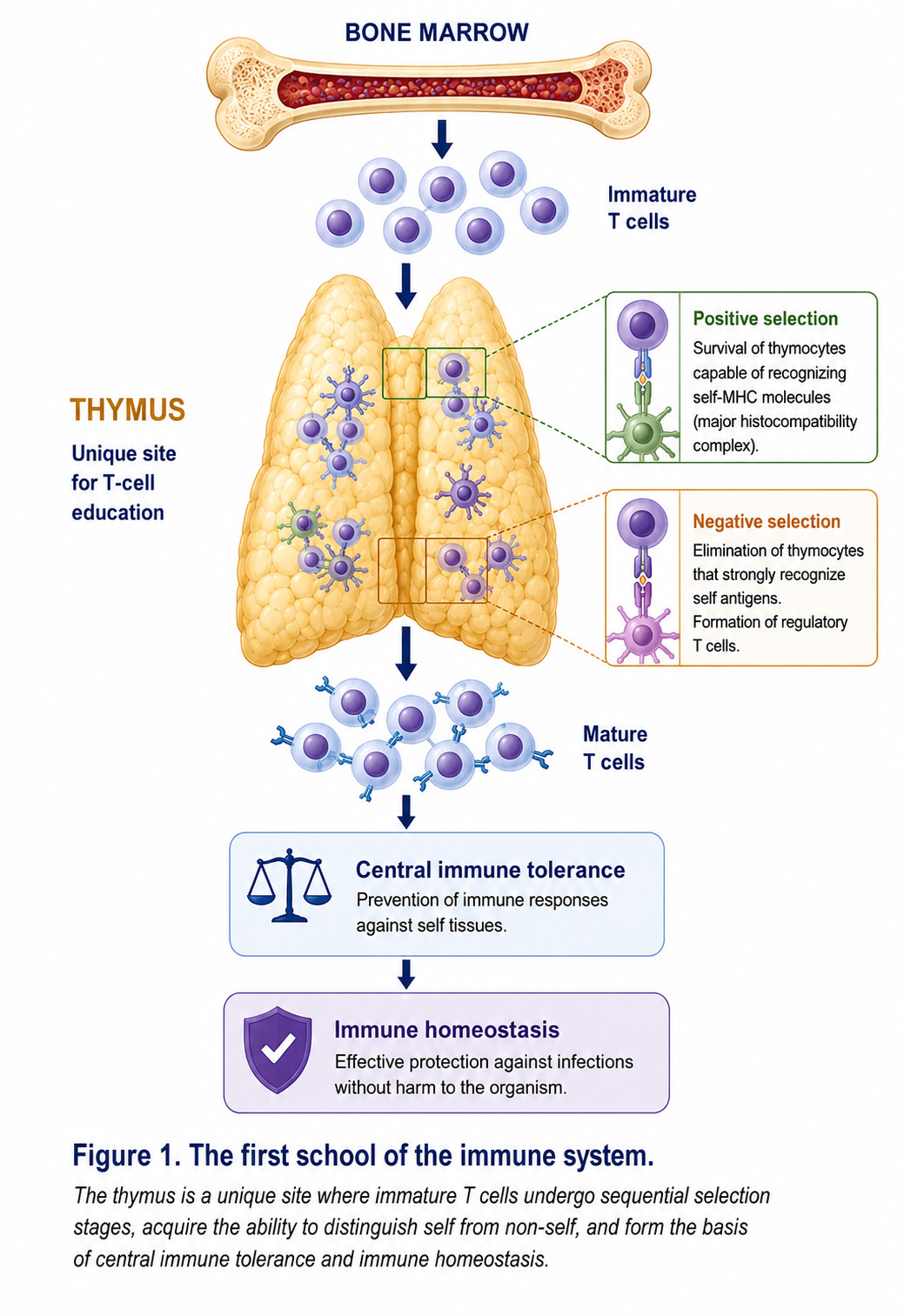
The thymus is a unique center of immune education, where immature T lymphocytes undergo sequential stages of selection, acquire the ability to distinguish self from non-self, and establish the foundations of immunological tolerance and immune homeostasis.
How the Immune System Learns to Tell Friends from Foes
Building an effective defense system requires more than the ability to recognize and eliminate potential threats. It must also prevent attacks against the body’s own tissues. In fact, one of the immune system’s greatest achievements is not its ability to wage war, but its ability to maintain peace [5, 7].
This is precisely the role of the thymus. As T lymphocytes mature, the thymus serves as a kind of examiner, guiding developing immune cells through successive stages of evaluation known as positive and negative selection [4, 5].
During positive selection, only cells capable of recognizing major histocompatibility complex (MHC) molecules, which are essential for immune surveillance, are allowed to survive. Cells that lack this ability fail to receive the signals necessary for survival and are eliminated [4, 5].
An even more critical stage, however, is negative selection. During this process, T lymphocytes that react too strongly to the body’s own tissues are removed, greatly reducing the risk of autoimmune disease [5, 7].
For many years, scientists believed that a protein called AIRE played the central role in this process. AIRE drives the expression of a wide variety of tissue-specific antigens, allowing developing T lymphocytes to become familiar with molecules normally found in different organs and tissues throughout the body [8]. More recent research, however, has shown that this system is far more sophisticated. Scientists have identified another key regulator, the protein FEZF2, which independently controls the expression of a distinct set of self-antigens. Today, it is believed that the combined actions of AIRE and FEZF2 provide developing T cells with a more comprehensive “introduction” to the body’s own tissues, significantly improving the establishment of immunological tolerance [11, 12].
In a sense, the thymus introduces future immune cells to a “map” of the body, teaching them to distinguish self from non-self.
Not all potentially dangerous cells are eliminated, however. Some instead develop into regulatory T cells (Tregs), a specialized population responsible for maintaining immunological tolerance and preventing excessive immune responses [9]. These cells play an essential role in preserving the delicate balance between effective immune defense and self-inflicted damage.
The immune system, therefore, is much more than a mechanism for fighting infections. Its proper function depends on its ability to maintain a delicate balance between action and restraint [7–10, 12]. Perhaps one of the immune system’s greatest achievements is not its ability to attack, but its ability to know when not to.
Why Childhood Matters
The immune system is not fully formed at birth. Like many other systems in the body, it develops gradually, progressing through a series of complex stages of maturation and adaptation. An increasing body of research shows that many aspects of adult health are shaped by events that occur long before the first symptoms of disease appear, and even long before adulthood itself [6, 13, 14].
This concept is reflected in the Developmental Origins of Health and Disease (DOHaD) framework, which views early life as a critical window during which the body’s long-term biological functions are established [13-15]. According to this model, conditions during fetal development, nutrition, environmental exposures, and many other factors can influence health in ways that may not become apparent until decades later.
Particular importance is now placed on the first 1,000 days of life, the period from conception through the second birthday. During this time, the body’s organs and physiological systems undergo rapid development, including the immune system. It is also during this period that the mechanisms enabling the body to adapt to its environment and maintain internal balance are established [13-15].
One of the most active organs during this critical window is the thymus. Even in the earliest stages of development, it begins shaping the T-cell immune system. Throughout childhood, the thymus reaches its peak functional activity, supplying the body with a diverse repertoire of T lymphocytes while establishing the mechanisms that underlie immunological tolerance [6, 10].
For this reason, adult health cannot be understood solely as the result of lifestyle choices or events that occur later in life. Growing evidence suggests that many aspects of health have much deeper origins. Long before a child ever walks through the doors of a school, the body has already passed through some of its most critical developmental stages, laying the foundation for health throughout life [13-15].
The First 1,000 Days of Life
Over the past several decades, the period from conception through the second birthday, known as the first 1,000 days of life, has become a major focus of scientific research. Today, it is recognized as one of the most important windows of opportunity in human development, profoundly influencing health across the decades that follow [13-15].
During this period, the body exhibits remarkable plasticity, allowing it to adapt to its environment. At the same time, this heightened adaptability also makes developing organs and physiological systems particularly sensitive to external influences.
The immune system is among the systems most profoundly shaped during this time. The first years of life are marked by the rapid establishment of the T-cell repertoire, the development of immunological tolerance, and the formation of the intricate interactions between the immune system and other physiological systems [6, 10].
Throughout this critical window, the thymus reaches its peak functional activity, guiding the maturation and education of the cells that will help maintain immune homeostasis throughout life [6, 10]. In other words, some of the most important lessons that shape lifelong health are learned long before a child speaks their first words or takes their first steps.
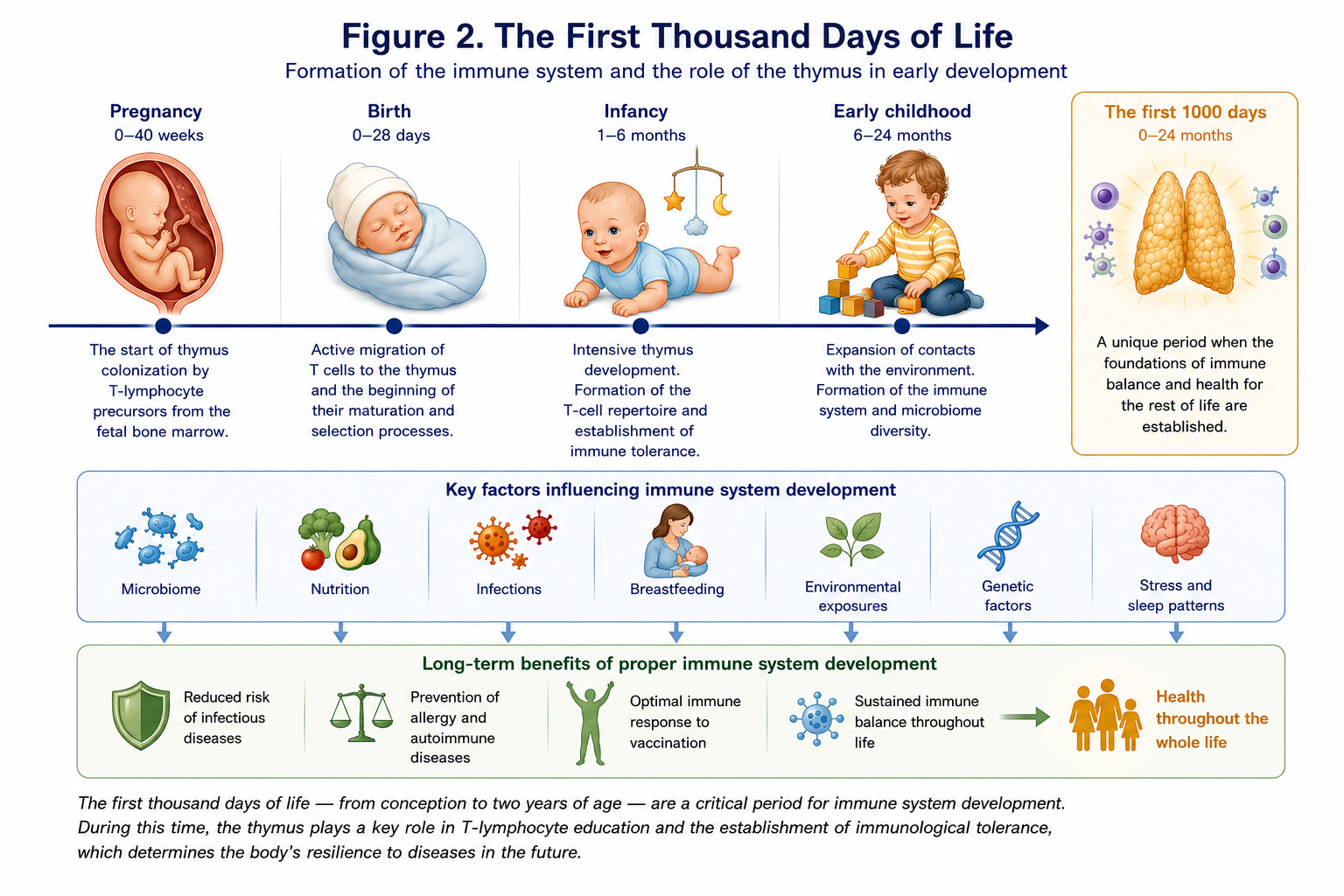
The period from conception through the second birthday is a critical stage in the development of the immune system. During this time, the thymus plays a central role in the education of T lymphocytes and the establishment of immunological tolerance, processes that can influence health throughout life.
When the First Teacher Grows Old
Throughout childhood, the thymus is one of the most active organs of the immune system. Yet soon after puberty, it begins to undergo gradual changes known as thymic involution. Over time, the organ’s functional tissue progressively shrinks and is increasingly replaced by adipose (fat) tissue [16].
At first glance, this may seem paradoxical. Why would an organ so essential to the development of the immune system begin to decline so early in life? Despite decades of research, there is still no definitive answer. Current hypotheses suggest that thymic involution may be part of an evolutionarily conserved strategy for reallocating the body’s resources once the active formation of the T-cell repertoire is largely complete. However, these ideas remain the subject of ongoing investigation [16, 17].
The changes that occur in the thymus are part of a broader process known as immunosenescence, or immune aging. As we grow older, the production of new T lymphocytes declines, the composition of the immune system shifts, and the diversity of the T-cell repertoire gradually decreases. Together, these changes can influence the body’s ability to respond to infections, reduce the effectiveness of vaccination, and impair the maintenance of immune homeostasis [16, 17].
Even so, thymic aging does not mean that the organ loses its importance. The thymus continues to contribute to immune function throughout adulthood, and its influence extends across the lifespan. Although the generation of new T lymphocytes gradually declines, the thymus continues to support their renewal and helps preserve the immune diversity required for effective immune responses [6, 10, 16].
Today, age-related thymic involution is regarded as one of the most intriguing and still unresolved questions in immunology. A deeper understanding of the mechanisms underlying this process could have important implications for the biology of aging, transplantation medicine, oncology, and many other fields.
Can the First Teacher Recover?
For many years, age-related thymic involution was considered an essentially irreversible process. The gradual loss of the organ’s functional tissue was viewed as an inevitable consequence of aging, with little potential for recovery [16].
More recent research, however, has revealed that the thymus possesses far greater plasticity than previously believed. Even after significant injury, the organ can activate biological mechanisms that promote the partial restoration of its structure and function [18].
Particularly compelling are studies of thymic regeneration following infections, chemotherapy, radiation therapy, and bone marrow transplantation. In response to these challenges, the body can activate a complex network of signaling molecules and growth factors that help rebuild the thymic microenvironment and restore the production of new T lymphocytes [18, 19].
Over the past several years, researchers have identified several key molecular pathways involved in thymic regeneration. Among the most important are signaling pathways associated with bone morphogenetic protein 4 (BMP4), interleukin-22 (IL-22), and keratinocyte growth factor (KGF), along with other molecules that support the repair of thymic epithelial cells and the restoration of the organ’s specialized microenvironment [18-20]. These discoveries have significantly expanded our understanding of the thymus’s regenerative capacity and opened new avenues of research in immunology and regenerative medicine.
Today, growing attention is focused on whether thymic function can be preserved or restored in older adults. Although clinical applications remain under active investigation, findings from experimental studies suggest that the thymus should be viewed not only as an organ affected by aging, but also as a promising target for future immune-based therapies [18, 20].
Current evidence indicates that age-related thymic involution is not an entirely irreversible process. The capacity for partial regeneration may, in fact, be one of the most remarkable characteristics of living systems.
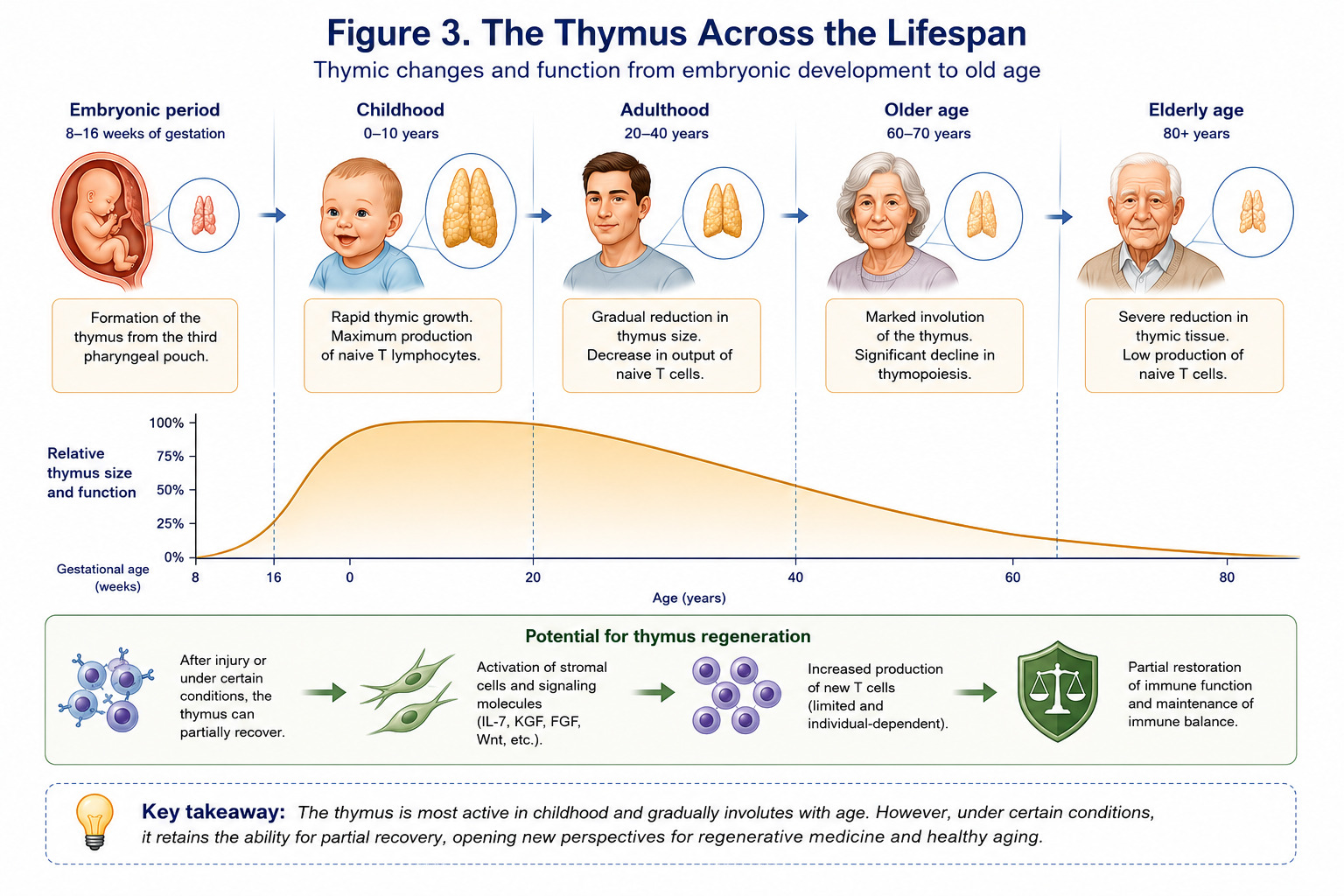
The thymus reaches its peak functional activity during childhood and then gradually undergoes age-related involution. However, modern research indicates that even in adulthood and old age, the organ retains a measurable capacity for partial regeneration.
Environmental Challenges
The immune system does not develop or function in isolation. Throughout life, it remains in constant interaction with the environment, responding to a wide range of internal and external influences. Some of these are a natural part of human life, while others have emerged relatively recently and have become the focus of intensive scientific investigation.
Among the best-studied factors affecting the thymus are infectious diseases. Many viral, bacterial, and parasitic infections can cause temporary changes in the organ’s structure and function. In most cases, once the infection has been cleared, regenerative mechanisms are activated, allowing the thymus to partially or even fully restore its normal function [18, 21].
Stress is another important influence. The immune, nervous, and endocrine systems are tightly interconnected, forming a complex regulatory network. Chronic stress can alter hormone levels, which in turn affect the biological processes taking place within the thymus [22].
Nutrition also plays a critical role in the development of the immune system. Its importance is particularly evident early in life, when the body’s organs and physiological systems are developing rapidly. Deficiencies in protein, vitamins, or essential micronutrients can alter thymus structure and disrupt the maturation of immune cells.
As industrialization has advanced, researchers have increasingly focused on other environmental factors. Air pollution, endocrine-disrupting chemicals, and per- and polyfluoroalkyl substances (PFAS) have become the subject of extensive research over the past several decades. Growing evidence suggests that some of these exposures can affect multiple components of the immune system, particularly during critical periods of immune development [23, 24].
These findings have gradually broadened the traditional view of immunology. It is becoming increasingly clear that immune health is shaped by a complex interplay of interconnected biological and environmental processes. As a result, modern science faces new questions that require integrating knowledge from immunology, toxicology, developmental biology, and environmental health sciences.
A New Question for Environmental Science
Over the past several decades, advances in immunology and toxicology have greatly expanded our understanding of the factors that influence the development and function of the immune system. Infections, nutrition, chronic stress, and a wide range of chemical exposures have long been recognized as key components of the complex interactions between the body and its environment.
In recent years, researchers have turned their attention to another class of environmental factors: microplastics and nanoplastics. As scientific evidence has accumulated, it has become clear that plastic released into the environment can gradually fragment into particles small enough to approach the size of cells and even subcellular structures. This realization has raised important new questions about how such particles may interact with living systems [25, 26].
Experimental studies indicate that microplastics and nanoplastics can interact with immune cells, enter certain cell types, and trigger a range of biological responses. Across various experimental models, researchers have observed increased oxidative stress, activation of inflammatory signaling pathways, including NF-κB, disruption of cellular metabolism, and alterations in the mechanisms of programmed cell death. These processes are considered among the possible pathways through which microplastics and nanoplastics may influence immune function [25, 26].
Animal studies have also reported changes in lymphoid organs, including the spleen and thymus, as well as alterations in immune cell populations, cytokine production, and immune responses. At the same time, findings from experimental models cannot be directly extrapolated to humans and require further confirmation through clinical research [25, 26].
Interest in this field has grown further following the first reports of microplastic and nanoplastic particles detected in human tissues and biological fluids, including the placenta and blood [27, 28]. These findings, by themselves, do not demonstrate that such particles cause disease. However, they underscore the need for a deeper understanding of the potential biological effects of long-term exposure.
For this reason, the effects of microplastics and nanoplastics on the human immune system remain an active area of scientific investigation. Although research in this field is advancing rapidly, many questions remain unanswered. Further studies are needed to standardize research methods, establish realistic levels of human exposure, and conduct long-term investigations that can better clarify the potential implications of these particles for human health [25, 26].
Perhaps one of the most important challenges facing modern science is understanding how emerging environmental factors interact with the biological processes that shape the immune system. In this context, the earliest stages of immune development deserve particular attention, as this is the period during which immunological tolerance is established, and the immune system receives its earliest and most fundamental training.
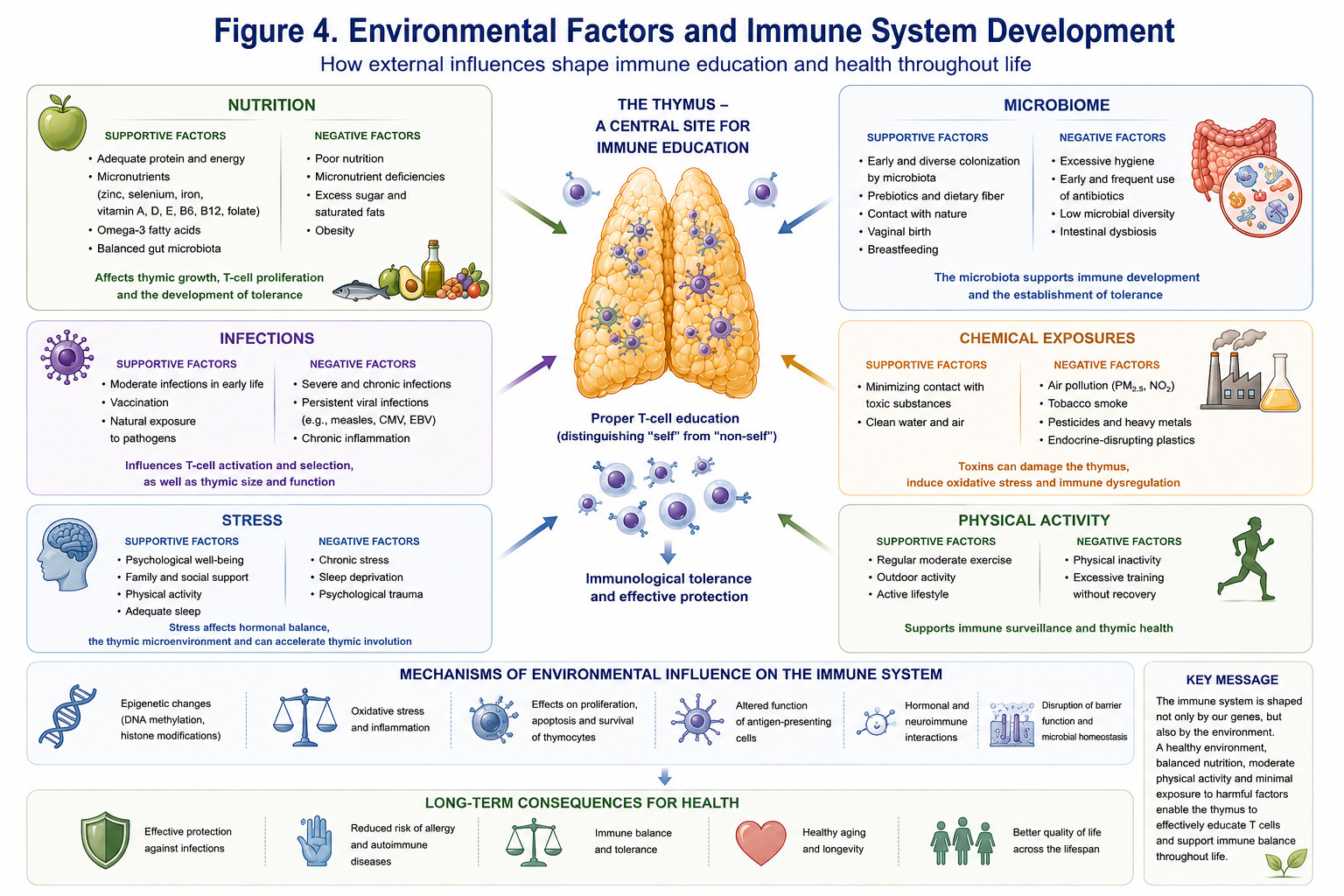
The immune system develops and functions under the influence of numerous interconnected environmental factors. Nutrition, infections, the microbiome, stress, chemical exposures, and lifestyle can all shape the processes through which the immune system is trained, immunological tolerance is established, and immune homeostasis is maintained.
What We Still Don’t Know
The history of science shows that progress is driven not only by the answers we discover but also by our willingness to ask new questions. Many of the greatest breakthroughs have been made because researchers were prepared to acknowledge that there were still fundamental aspects of nature waiting to be understood.
Despite remarkable advances in immunology, the thymus continues to hold many mysteries. One of the most enduring questions is why this organ undergoes age-related involution. Why does an organ that plays such a central role in establishing immunity begin to decline soon after puberty? Despite decades of investigation, there is still no definitive answer [16, 17].
Another important question concerns the limits of the thymus’s regenerative capacity. Although modern research has demonstrated that the organ is capable of partial regeneration, the biological mechanisms underlying these processes remain an active area of investigation [18-20].
Many unanswered questions also relate to the earliest stages of life. Growing evidence suggests that fetal development and the first years after birth play a critical role in shaping the immune system. Yet the full extent and long-term consequences of these early developmental processes have yet to be fully understood [13-15].
The same is true for newly recognized environmental factors that have only recently become the focus of intensive scientific research. Although evidence regarding microplastics and nanoplastics is accumulating rapidly, many aspects of how these particles interact with living systems remain poorly understood, and their long-term implications for human health require investigation [25-28].
Uncertainty is not a sign of weakness in science. On the contrary, the willingness to recognize unanswered questions lies at the heart of scientific progress. As new discoveries continue to emerge, our understanding of the immune system will continue to evolve, opening new frontiers for research.
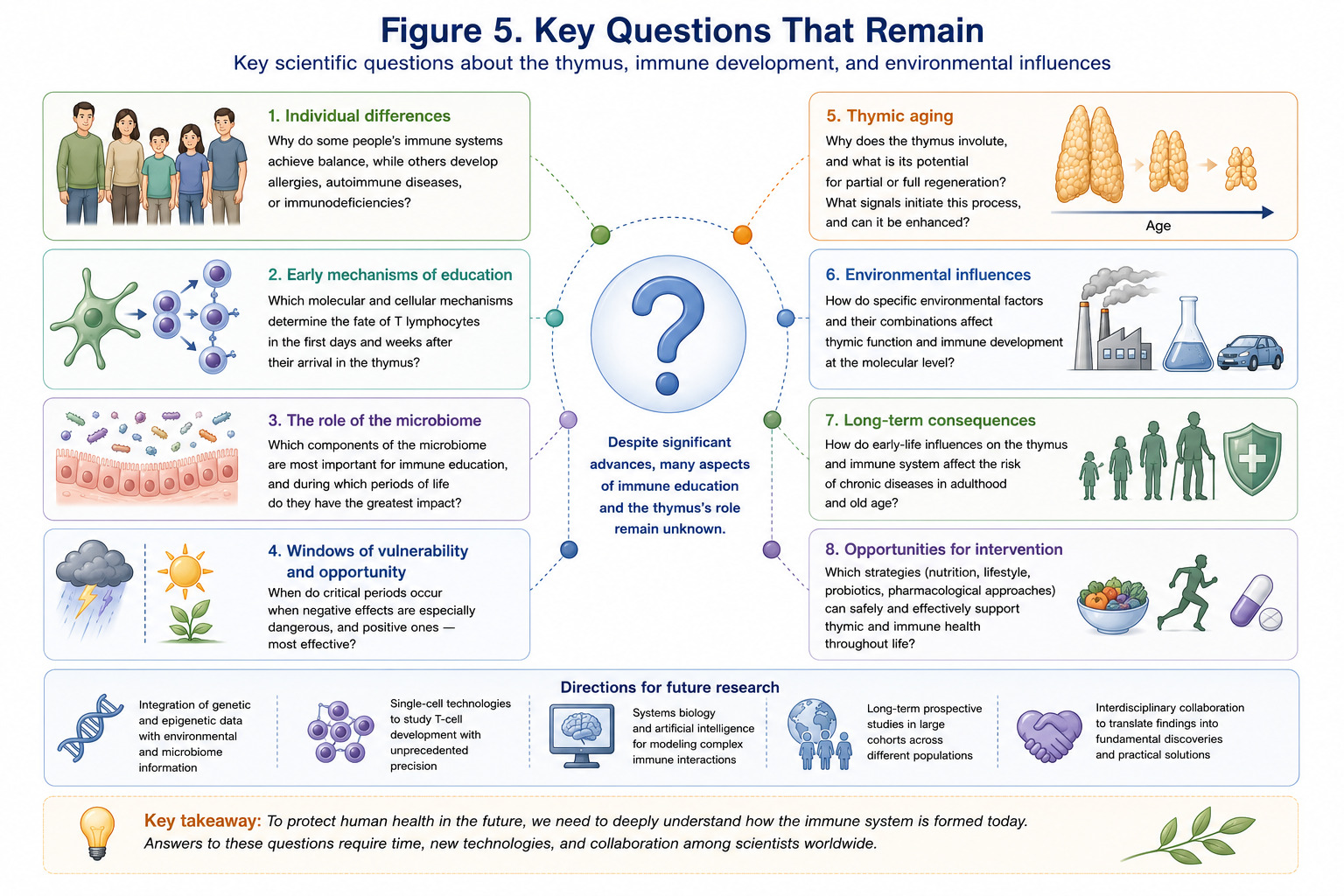
Despite significant progress in understanding the thymus and the immune system, many aspects of their development, aging, regeneration, and interactions with the environment remain under active investigation. Advances in technology and interdisciplinary research are creating new opportunities to answer these fundamental questions.
The Immune System’s First Teacher
For centuries, the thymus remained one of the most mysterious organs in the human body. Its function was unknown, and it was often regarded as little more than an anatomical curiosity. Scientific discoveries during the second half of the twentieth century, however, completely transformed that view [1–3].
Today, the thymus is recognized as one of the central organs responsible for shaping the immune system. It is here that T lymphocytes undergo the complex process of education that enables them not only to recognize potential threats, but also to maintain the delicate balance between immune defense and immunological tolerance [4, 5, 7–9, 12]. In this sense, the thymus is far more than a site where immune cells mature. It is a school where the immune system receives its first, and perhaps its most important, lessons.
Modern research has shown that the thymus's influence extends far beyond childhood. Despite the changes it undergoes with age, the organ remains an important part of the complex network that supports immune health throughout life [6, 10, 16–20]. At the same time, new discoveries continue to deepen our understanding of development, aging, and the body’s interactions with the environment.
The story of the thymus is also a story of how science advances. What was once considered a minor and insignificant structure is now recognized as one of the most important components of the system that safeguards human health.
Perhaps the immune system’s greatest achievement is not its ability to wage war, but its ability to maintain balance. And it is the thymus that helps lay the foundation for this remarkable capacity.
The story of the thymus reminds us that the most important processes in the body are not always the most visible. Sometimes, the smallest and least conspicuous structures exert an influence that lasts a lifetime.
Before the immune system can protect the body, it must first undergo training.
And one of its first, and most important, teachers remains a small organ hidden behind the breastbone, one that most people never think about: the thymus.
About the authors

References
- Miller J. F. A. P. “The Discovery of Thymus Function and of Thymus-Derived Lymphocytes.” Immunological Reviews 185 (2002): 7–14. https://doi.org/10.1034/j.1600-065X.2002.18502.x
- Miller J. F. A. P. “The Early Work on the Discovery of the Function of the Thymus, an Interview with Jacques Miller.” Cell Death & Differentiation 27 (2020): 396–401. https://doi.org/10.1038/s41418-019-0462-y
- Miller J. F. A. P. “The Function of the Thymus and Its Impact on Modern Medicine.” Science 369 (2020): eaba2429. https://doi.org/10.1126/science.aba2429
- Ashby K. M., Hogquist K. A. “A Guide to Thymic Selection of T Cells.” Nature Reviews Immunology 24 (2024): 103–117. https://doi.org/10.1038/s41577-023-00911-8
- Klein L., Kyewski B., Allen P. M., et al. “Positive and Negative Selection of the T Cell Repertoire: What Thymocytes See and Don’t See.” Nature Reviews Immunology 14 (2014): 377–391. https://doi.org/10.1038/nri3667
- Kumar B. V., Connors T. J., Farber D. L. «Human T Cell Development, Localization, and Function throughout Life», Immunity 48 (2018): 202–213, https://doi.org/10.1016/j.immuni.2018.01.007
- Kyewski B., Klein L. “A Central Role for Central Tolerance.” Annual Review of Immunology 24 (2006): 571–606. https://doi.org/10.1146/annurev.immunol.23.021704.115601
- Anderson M. S., Su M. A. “AIRE Expands: New Roles in Immune Tolerance and Beyond.” Nature Reviews Immunology 16 (2016): 247–258. https://doi.org/10.1038/nri.2016.9
- Sakaguchi S., Miyara M., Costantino C. M., et al. “FOXP3+ Regulatory T Cells in the Human Immune System.” Nature Reviews Immunology 10 (2010): 490–500. https://doi.org/10.1038/nri2785
- Thapa P., Farber D. L. “The Role of the Thymus in the Immune Response.” Thoracic Surgery Clinics 29 (2019): 123–131. https://doi.org/10.1016/j.thorsurg.2018.12.001
- Takaba H., Morishita Y., Tomofuji Y., et al. “Fezf2 Orchestrates a Thymic Program of Self-Antigen Expression for Immune Tolerance.” Cell 163 (2015): 975–987. https://doi.org/10.1016/j.cell.2015.10.013
- Mathis D., Benoist C. “A Decade of AIRE.” Nature Reviews Immunology 7 (2007): 645–650. https://doi.org/10.1038/nri2136
- Barker D. J. P. “The Developmental Origins of Adult Disease.” Journal of the American College of Nutrition 23 (2004): 588S–595S. https://doi.org/10.1080/07315724.2004.10719428
- Gluckman P. D., Hanson M. A. “Developmental Origins of Disease Paradigm: A Mechanistic and Evolutionary Perspective.” Pediatric Research 56 (2004): 311–317. https://doi.org/10.1203/01.PDR.0000135998.08025.FB
- Hanson M. A., Gluckman P. D. “Early Developmental Conditioning of Later Health and Disease: Physiology or Pathophysiology?” Physiological Reviews 94 (2014): 1027–1076. https://doi.org/10.1152/physrev.00029.2013
- Palmer D. B. “The Effect of Age on Thymic Function.” Frontiers in Immunology 4 (2013): 316. https://doi.org/10.3389/fimmu.2013.00316
- Aw D., Palmer D. B. “The Origin and Implication of Thymic Involution.” Aging and Disease 2 (2011): 437–443. https://pmc.ncbi.nlm.nih.gov/articles/PMC3295077/
- Velardi E., Tsai J. J., van den Brink M. R. M. “T-Cell Regeneration after Immunological Injury.” Nature Reviews Immunology 21 (2021): 277–291. https://doi.org/10.1038/s41577-020-00457-z
- Wertheimer T., Velardi E., Tsai J., et al. “Production of BMP4 by Endothelial Cells Is Crucial for Endogenous Thymic Regeneration.” Science Immunology 3 (2018): eaal2736. https://doi.org/10.1126/sciimmunol.aal2736
- Chaudhry M. S., Velardi E., Dudakov J. A., et al. “Thymus: The Next (Re)generation.” Immunological Reviews 271 (2016): 56–71. https://doi.org/10.1111/imr.12418
- Savino W. “The Thymus Is a Common Target Organ in Infectious Diseases.” PLoS Pathogens 2 (2006): e62. https://doi.org/10.1371/journal.ppat.0020062
- Besedovsky H. O., del Rey A. “Immune-Neuro-Endocrine Interactions: Facts and Hypotheses.” Endocrine Reviews 17 (1996): 64–102. https://doi.org/10.1210/edrv-17-1-64
- Gore A. C., Chappell V. A., Fenton S. E., et al. “EDC-2: The Endocrine Society’s Second Scientific Statement on Endocrine-Disrupting Chemicals.” Endocrine Reviews 36 (2015): E1–E150. https://doi.org/10.1210/er.2015-1010
- Grandjean P., Andersen E. W., Budtz-Jørgensen E., et al. “Serum Vaccine Antibody Concentrations in Children Exposed to Perfluorinated Compounds.” JAMA 307 (2012): 391–397. https://doi.org/10.1001/jama.2011.2034
- Yong C. Q. Y., Valiyaveettil S., Tang B. L. “Toxicity of Microplastics and Nanoplastics in Mammalian Systems.” International Journal of Environmental Research and Public Health 17 (2020): 1509. https://doi.org/10.3390/ijerph17051509
- SAPEA (Science Advice for Policy by European Academies). A Scientific Perspective on Microplastics in Nature and Society. Evidence Review Report no. 4. SAPEA, 2019. https://doi.org/10.26356/microplastics
- Ragusa A., Svelato A., Santacroce C., et al. “Plasticenta: First Evidence of Microplastics in Human Placenta.” Environment International 146 (2021): 106274. https://doi.org/10.1016/j.envint.2020.106274
- Leslie H. A., van Velzen M. J. M., Brandsma S. H., et al. “Discovery and Quantification of Plastic Particle Pollution in Human Blood.” Environment International 163 (2022): 107199. https://doi.org/10.1016/j.envint.2022.107199
© 2026 Rinat Akhmetzakirov. This article is published under a Creative Commons Attribution 4.0 International licence (CC BY 4.0) unless a different licence is stated in the credit line of an individual item. The authors retain copyright; ALLATRA Natural Science Review holds the right of first publication. The Review charges no submission, publication, or article processing fees. © 2026 ALLATRA Inc.