

Micro- & Nanoplastics
The First Environment: Microplastics, Nanoplastics, Pregnancy, and the Future of Human Health
1 Department of Gynecology and Obstetrics, Ospedale Civile di Sassuolo SpA, Italy
Corresponding author: Antonio Ragusa, [email protected]
Article
1. The First Environment
For most of modern medicine, environmental exposure was assumed to begin at birth. The fetus was generally considered protected within a privileged biological environment, shielded from many of the hazards present in the outside world. The placenta, often described as a selective barrier, was viewed as an efficient interface capable of regulating exchanges between mother and child while protecting the developing fetus from potentially harmful agents.
Over the past decade, however, this assumption has been profoundly challenged.
A growing body of evidence suggests that microplastics and nanoplastics (MNPs) — microscopic particles and fragments generated by the degradation of synthetic materials and industrial products — are capable of reaching human tissues previously considered inaccessible. These particles have been detected in blood, lungs, liver, kidneys, the human brain, and, most importantly, within the maternal-fetal unit itself.
In 2020, our research group reported the first evidence of microplastics in human placental tissue, a finding that challenged long-standing assumptions regarding the isolation of the intrauterine environment and contributed to opening an entirely new field of investigation. The discovery attracted international attention because it suggested that synthetic particles generated by human activities could reach one of the most protected biological interfaces in human development. Recent studies have identified MNPs in placental tissue, amniotic fluid, umbilical cord blood, and human breast milk, indicating that exposure to anthropogenic particles may begin long before birth [1-9].
This discovery represents more than a toxicological concern. It challenges one of the most fundamental concepts in medicine: the notion that the intrauterine environment is largely insulated from the ecological conditions surrounding the mother.
The implications are profound. If synthetic particles are capable of crossing biological barriers and reaching the earliest stages of human development, then pregnancy becomes not merely a reproductive process but the first frontier of environmental health.
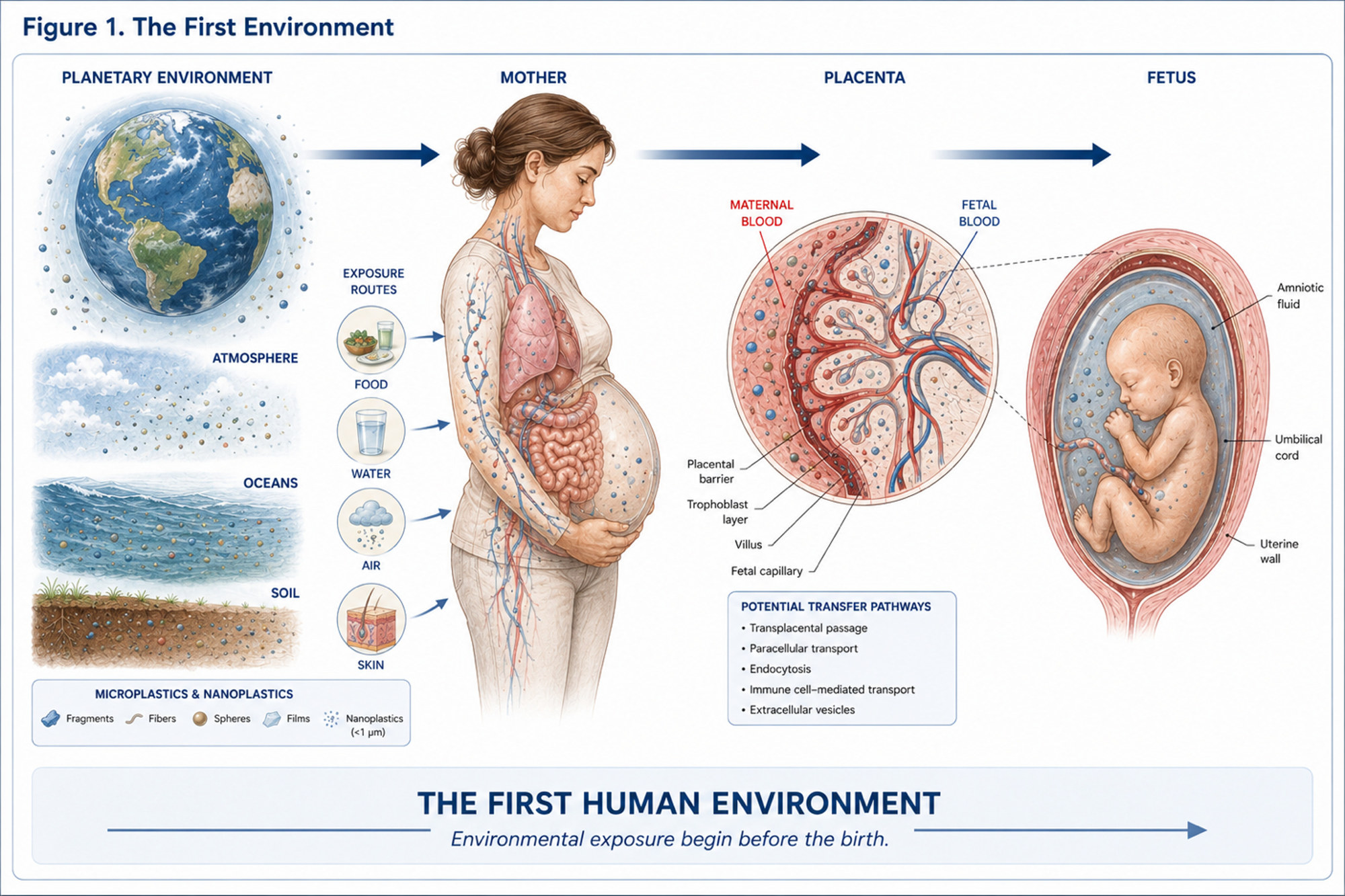
From this perspective, the fetus can no longer be regarded as an isolated biological entity. Rather, it becomes part of a complex continuum linking planetary systems, environmental contamination, maternal physiology, placental function, and lifelong health trajectories (Figure 1).
The emerging science of microplastics invites us to reconsider a simple but powerful question: when does environmental exposure truly begin? Increasingly, the answer appears to be: before birth.
2. How MNPs Enter the Human Body
Few materials have transformed human society as profoundly as plastic.
Since large scale industrial production began in the middle of the twentieth century, plastics have revolutionized medicine, food preservation, transportation, communication technologies, and countless aspects of everyday life. Lightweight, durable, versatile, and inexpensive, synthetic polymers became one of the defining materials of the modern age. Global plastic production increased from approximately 2 million metric tons annually in 1950 to more than 400 million metric tons per year today, with cumulative production exceeding 8 billion metric tons [10-11].
Plastic is perhaps the most successful mimic ever created by humans. It can imitate wood, glass, ivory, leather, cotton, silk, stone, and countless other natural materials.
The same characteristics that made plastics economically successful also created an unprecedented environmental challenge. Most conventional plastics do not readily biodegrade. Instead, they gradually fragment under the influence of sunlight, mechanical abrasion, temperature fluctuations, and biological processes. Over time, larger plastic objects are transformed into increasingly smaller particles known as microplastics (typically defined as particles smaller than 5 mm) and nanoplastics , commonly defined as plastic particles smaller than 1 μm, although definitions and analytical thresholds remain under discussion [12-13].
These particles are now found in virtually every environmental compartment that has been investigated. They have been detected in oceans, rivers, lakes, agricultural soils, atmospheric dust, polar ice, deep ocean sediments, and remote mountain ecosystems [14-17]. Their global distribution demonstrates that plastic pollution is no longer a local waste management problem but a planetary phenomenon.
As environmental contamination has expanded, so too have opportunities for human exposure.
Humans encounter microplastics through multiple pathways. Food and drinking water represent important sources of exposure. Microplastic particles have been identified in seafood, table salt, fruits, vegetables, bottled water, and tap water [18-21]. Airborne particles represent an additional and often underestimated route (Figure 2). Synthetic fibers released from textiles, household materials, industrial activities, and urban environments can be inhaled and deposited in the respiratory tract. Dermal exposure is also possible, although evidence for systemic absorption through intact skin remains limited [22-23].
Recent estimates suggest that humans may ingest or inhale tens of thousands of plastic particles each year, although precise exposure levels remain difficult to quantify because analytical methods are still evolving [18-19]. The challenge becomes even greater when considering nanoplastics, whose extremely small size may facilitate interactions with biological tissues that are not possible for larger particles.
For many years, scientists assumed that these particles would remain largely confined to the gastrointestinal tract and be eliminated from the body. Emerging evidence suggests that this assumption may have been overly optimistic. Studies performed during the past decade have demonstrated the presence of microplastic and nanoplastic particles in human blood, lungs, liver, and other human tissues [22-27]. Plastic particles have become biological as well as environmental contaminants.
The question is therefore no longer whether humans are exposed to microplastics. The evidence strongly indicates that they are. The more pressing scientific question has become: what happens after these particles enter the human body?
The extraordinary success of plastic materials was driven by genuine technological advantages. Plastics reduced costs, simplified transportation, improved food preservation, and enabled countless innovations. Yet the same economic forces that accelerated their adoption also contributed to the rapid displacement of more inert materials such as glass, metal, and natural fibers.
As a result, decisions that profoundly altered environmental exposure patterns for billions of people were often driven primarily by market efficiency rather than by long-term biological evidence.
This observation should not be interpreted as an accusation against industry, nor as a rejection of technological progress. It is simply a reminder that economic success and public health are not always identical objectives.
When uncertainty exists regarding potential risks to future generations, precaution should not be viewed as an obstacle to innovation. Rather, it should be considered one of the responsibilities of a mature society.
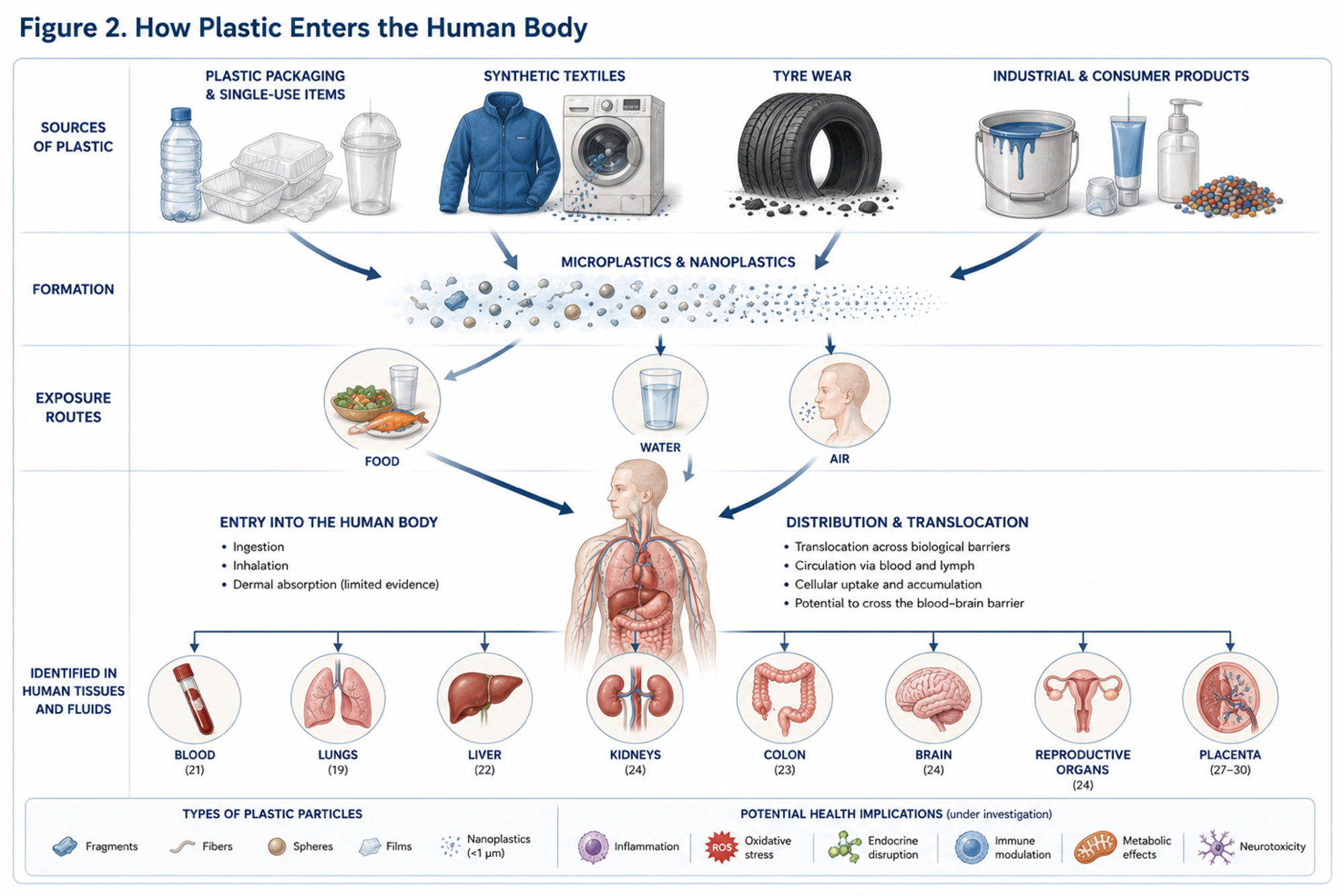
Plastic materials released from packaging, textiles, transportation, and consumer products undergo environmental fragmentation into microplastics and nanoplastics. Human exposure occurs primarily through food, water, and air, allowing particles to enter biological systems and potentially accumulate in multiple tissues. This figure illustrates the continuum linking industrial plastic production, environmental contamination, human exposure, and the emerging investigation of potential health effects.
3. The Maternal-Fetal Connection
Among all the recent discoveries concerning microplastics and human health, perhaps none has been more surprising than their detection within the maternal-fetal environment.
For decades, the placenta was viewed primarily as a highly selective biological interface. Although it was never considered an absolute barrier, it was generally assumed to provide substantial protection against many environmental contaminants. This assumption remains broadly valid. The placenta performs remarkable physiological functions, regulating the exchange of oxygen, nutrients, hormones, immune signals, and waste products between mother and fetus. However, recent evidence suggests that some anthropogenic particles may also traverse or accumulate within this complex organ [1-7].
The placenta is not the only compartment in which microplastics have been identified. Investigators have subsequently reported the presence of plastic particles in human amniotic fluid, umbilical cord blood, meconium, and breast milk [4-9]. These findings collectively indicate that environmental exposure may begin during fetal life and continue throughout the earliest stages of postnatal development (Figure 3) [9].
This observation represents a profound conceptual shift. Traditionally, environmental health has focused largely on exposures occurring after birth. Air pollution, contaminated water, occupational hazards, dietary contaminants, and lifestyle factors have generally been evaluated within postnatal frameworks. The emerging evidence on microplastics suggests that exposure histories may begin considerably earlier.
Nevertheless, developmental biology teaches an important lesson: early life stages are uniquely sensitive to environmental influences. During fetal development, organs are forming, cellular differentiation is occurring at extraordinary speed, and physiological systems are establishing the foundations that will support health throughout life. Small perturbations occurring during these critical windows may have disproportionately large consequences compared with similar exposures occurring in adulthood [28-29].
Experimental studies have begun to explore possible mechanisms through which microplastic and nanoplastic particles might influence biological systems. Proposed pathways include oxidative stress, inflammatory responses, endocrine disruption, altered cellular signaling, and interactions with the immune system [30-33].
The maternal-fetal environment occupies a unique position in this debate. It represents the earliest stage at which environmental contamination can intersect with human biology. For this reason, pregnancy may become one of the most important settings in which to investigate the long-term implications of microplastic exposure.
The question is no longer whether synthetic particles can reach the maternal-fetal environment. Multiple studies indicate that they can. The extent to which different particles reach fetal tissues and the biological significance of this exposure remain under investigation.
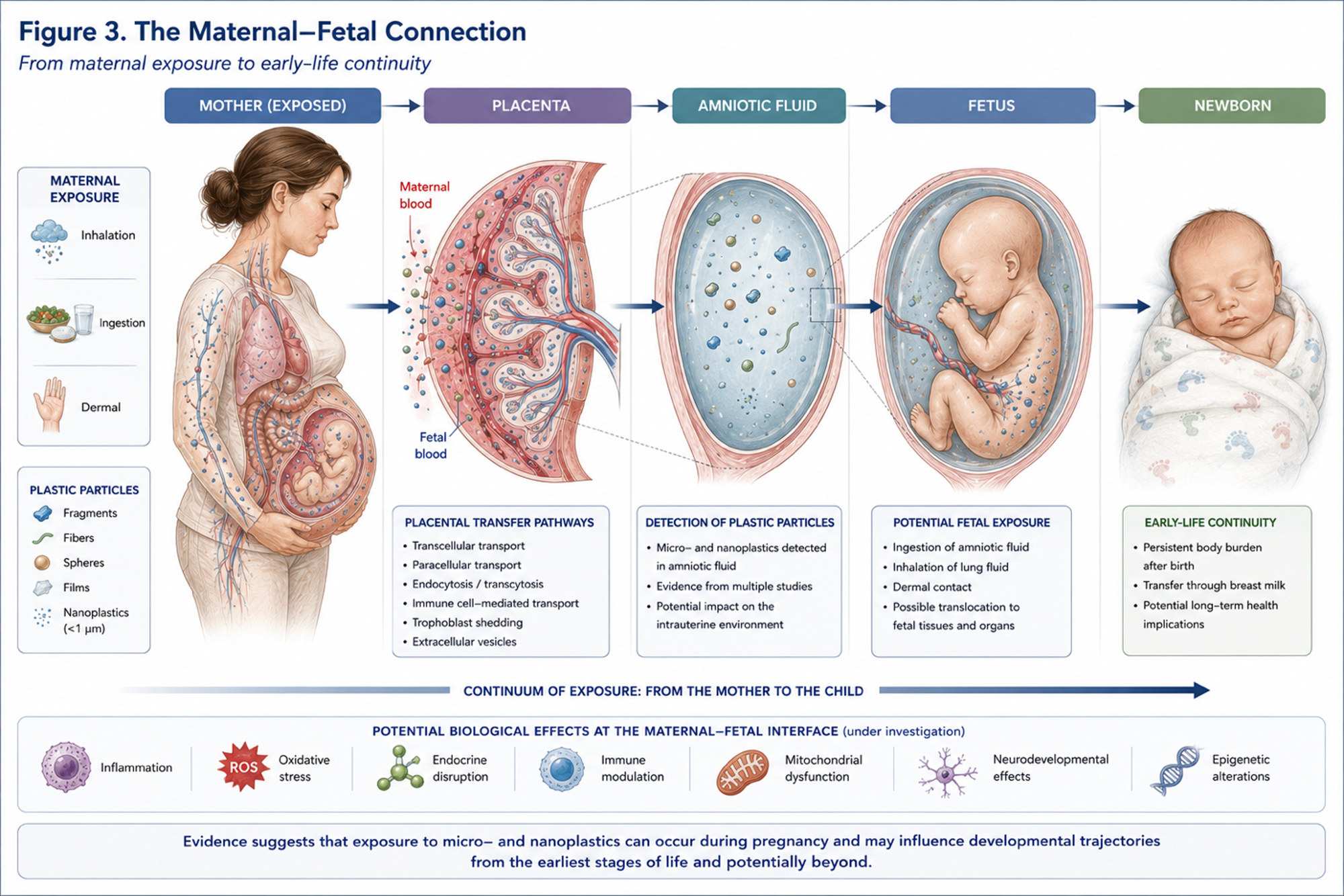
The maternal-fetal unit represents the earliest biological interface between environmental contamination and human development. Microplastics and nanoplastics originating from food, water, air, and dermal exposure may reach the maternal circulation and have been identified in placental tissue, amniotic fluid, umbilical cord blood, and breast milk. This continuum suggests that environmental exposure can begin before birth and may extend across critical developmental windows, from fetal life to infancy and beyond. The figure illustrates the concept that pregnancy is not only a reproductive process but also a key stage in environmental health.
4. Metabolism and the Obesogen Hypothesis
For decades, rising rates of obesity have been attributed primarily to excess caloric intake, reduced physical activity, and genetic susceptibility. While these factors undoubtedly remain central, researchers have increasingly explored the possibility that environmental contaminants may also contribute to metabolic dysfunction. Among these, certain plastic-associated chemicals have attracted particular attention because of their ability to interfere with endocrine and metabolic pathways.
The role of endocrine disrupting chemicals in metabolic disease is no longer considered a purely speculative hypothesis. A substantial body of experimental and epidemiological evidence indicates that several plastic associated compounds can interfere with hormonal regulation, adipocyte differentiation, appetite control, insulin sensitivity, and energy metabolism. While obesity remains a multifactorial condition driven primarily by nutrition, physical activity, genetics, and social determinants, environmental contaminants are increasingly recognized as potential contributors to the global metabolic crisis. Antimony compounds are widely used as catalysts in PET manufacture and may migrate from PET containers under certain storage conditions. Their possible endocrine and metabolic implications remain under investigation [34].
Compounds such as bisphenols, phthalates, and other plastic-related substances have been described as potential "obesogens" because experimental studies suggest that they may influence adipocyte development, energy balance, insulin sensitivity, and hormonal regulation [35-38]. More specifically, a 2022 study by Molonia et al. demonstrated that the PET-related compounds terephthalic acid (TPA) and dimethyl terephthalate (DMT), the starting monomers used to synthesize PET, induced significant lipid accumulation in murine 3T3-L1 preadipocytes at nanomolar concentrations (10 nM) comparable to levels found in water from PET packaging, activating key adipogenic markers (PPAR-γ, C/EBPβ, FABP4, FASN) and the NF-κB inflammatory pathway via estrogen receptors [39]. More recently, attention has expanded toward microplastics and nanoplastics themselves, although evidence remains preliminary and many mechanistic questions are still unresolved.
The history of food and beverage packaging illustrates how rapidly environmental exposure can change. During much of the twentieth century, water, milk, wine, and soft drinks were predominantly stored in glass containers.
The transition from glass to modern plastic packaging did not occur primarily because of demonstrated health advantages. Rather, it was driven by economic efficiency, reduced transportation costs, lower breakage rates, and the logistical benefits associated with lightweight materials.
Glass and earlier plastic containers and packaging systems (PVC) were progressively replaced by polyethylene terephthalate (PET), which offered additional economic and industrial advantages. As a result, billions of people shifted within a few decades from predominantly glass-based food and beverage storage to continuous exposure to synthetic polymers.
One generation effectively modified the exposure profile of the next without the possibility of evaluating long-term biological consequences beforehand. While PET undoubtedly contributed to the global availability of food and beverages, its widespread adoption illustrates how economic priorities can reshape human exposure patterns on a planetary scale.
The question is therefore not whether PET brought benefits. Clearly it did. The question is whether economic convenience alone should be sufficient justification for environmental transitions whose biological implications may only become apparent decades later.
This transition undoubtedly brought important economic and logistical advantages. Yet it also created an unprecedented situation in human history: billions of individuals now experience daily and lifelong contact between food, beverages, and synthetic polymers.
A substantial body of evidence indicates that several plastic-associated chemicals can interfere with endocrine regulation and energy metabolism. Some substances used in, or potentially released from, PET production and packaging have therefore attracted increasing scientific attention.
The long-term biological implications of this transformation remain incompletely understood. From a public health perspective, the replacement of traditional inert materials with plastic packaging may represent one of the largest uncontrolled environmental exposure experiments ever conducted on the human population. Unlike conventional scientific experiments, however, the participants never provided informed consent, the duration was measured in generations rather than years, and the biological outcomes are still being investigated.
Never before in human history had entire populations experienced continuous, lifelong contact between food and beverages and synthetic polymer materials on such a scale. It is reasonable to acknowledge that society adopted these materials long before the long-term biological implications of chronic exposure could be fully evaluated.
5. What We Know, What We Suspect, and What We Still Do Not Know
The discovery of MNPs within human tissues has generated understandable concern. Whenever a previously unrecognized contaminant is found in blood, organs, or the maternal-fetal environment, a fundamental question immediately arises: what does this mean for human health?
This statement should not be interpreted as a sign of ignorance or scientific failure. Rather, it reflects the reality of how science progresses. Detection is often the first stage of discovery. Understanding biological consequences requires years, and sometimes decades, of additional research. Several facts, however, are already well established. First, human exposure is real and widespread. MNPs have been identified in environmental systems across the globe and have been detected in multiple human tissues [14-27]. The question is no longer whether exposure occurs, but how much exposure occurs and what its consequences may be. Second, the smallest particles appear biologically relevant. Nanoplastics, because of their dimensions, may interact with cells, biological membranes, and intracellular structures in ways that larger particles cannot. Experimental studies have shown that these particles can induce oxidative stress, inflammatory responses, altered cellular signaling, and disturbances of normal physiological processes [30-33]. Third, vulnerability is unlikely to be uniform across the human lifespan. Early developmental stages, including fetal life, infancy, and childhood, may represent periods of increased susceptibility. During these critical windows, even subtle environmental influences can shape biological systems in ways that persist long after the original exposure has ended [28-29].
Certain plastic-associated chemicals, including bisphenols, phthalates, and related compounds, have been described as potential environmental obesogens because they can interfere with hormonal signaling, adipocyte differentiation, insulin regulation, and energy metabolism [35-38].
This discussion acquires additional relevance when considered in the context of modern food packaging. As noted above, the replacement of glass by PET was not simply a technological innovation; it represented a global change in patterns of human exposure. Billions of people moved from occasional contact with plastics to continuous, lifelong interaction with synthetic polymers. Such a profound environmental transition occurred largely for economic and logistical reasons, long before its biological consequences could be adequately evaluated.
The challenge facing contemporary science is therefore not merely to identify microplastics, but to determine whether their presence is biologically meaningful, under what circumstances, and for whom.
Many scientific questions remain.
Yet perhaps the most important question is not biological but societal.
How much evidence should be required before preventive action is justified when future generations are potentially involved?
History teaches that waiting for absolute certainty has often delayed responses to environmental threats. The challenge is therefore not only to understand microplastics, but also to decide how societies should respond to uncertainty when the earliest stages of human life may be affected (Figure 4).
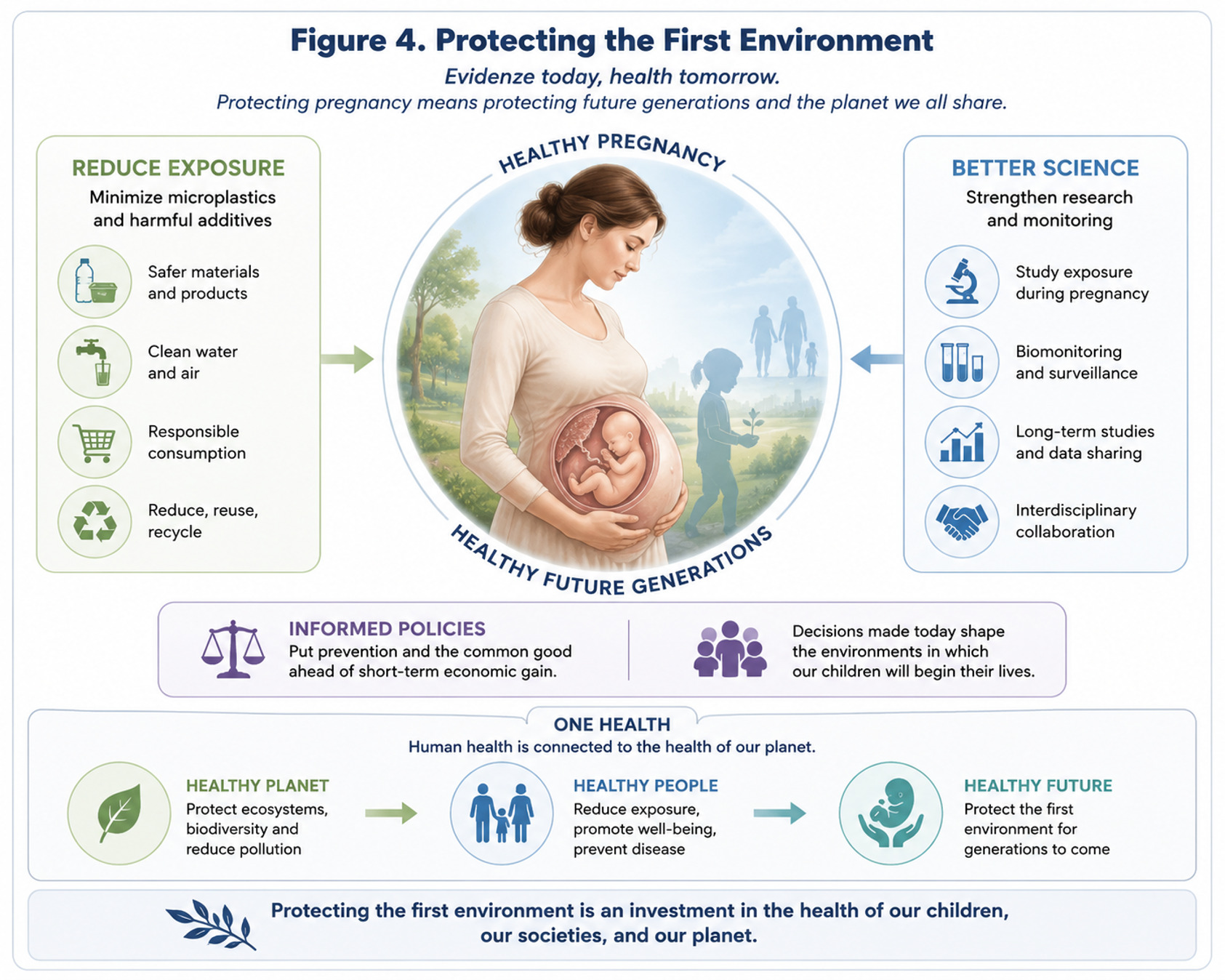
The health of future generations begins long before birth. This figure illustrates the concept that protecting pregnancy means protecting the first human environment. Through responsible environmental stewardship, scientific research, informed public policies, and a One Health approach, societies can reduce harmful exposures and promote healthier developmental trajectories for children yet to be born.
6. Why Pregnancy Should Become a Priority in Environmental Health
The emerging science of microplastics invites a broader reconsideration of environmental health priorities.
For much of modern public health, prevention has focused on individuals who are already born. Efforts have concentrated on reducing exposure to pollutants in workplaces, homes, schools, and communities. While these interventions remain essential, growing evidence suggests that the origins of health and disease may begin much earlier than previously recognized [28-29].
Pregnancy occupies a unique position at the intersection of human biology and the environment. The maternal-fetal unit represents a highly dynamic system in which maternal physiology, nutrition, environmental exposures, and placental function interact continuously. For this reason, pregnancy may serve not only as a critical developmental window but also as a sensitive indicator of broader environmental conditions.
Historically, some of the most important public health advances emerged from recognizing the vulnerability of early life. Improvements in maternal nutrition, reduction of tobacco exposure, folic acid supplementation, vaccination programs, and safer obstetric care have all demonstrated that protecting mothers and infants generates benefits that extend far beyond pregnancy itself [40-43].
The emerging evidence on MNPs suggests that environmental protection may require a similarly long-term perspective. If exposure begins before birth, then prevention strategies cannot start in adulthood. They must begin earlier, potentially even before conception.
Importantly, this does not imply fear, alarmism, or unrealistic expectations. Plastic materials have brought undeniable benefits to medicine, food preservation, sanitation, transportation, and modern life. The challenge is not to demonize a material, but to understand how to use it responsibly while minimizing unintended consequences.
This perspective aligns closely with the principles of One Health, which recognize that human health, animal health, and environmental health are inseparably connected. Microplastics illustrate this interconnectedness with unusual clarity. Particles released into oceans, rivers, soils, and the atmosphere do not remain confined to those environments. They move through ecosystems, food chains, biological systems, and ultimately human bodies [44].
For this reason, the question of microplastics is not merely a toxicological issue. It is also a question of stewardship.
What kind of environment are we creating for future generations?
What forms of exposure are we willing to accept in exchange for consumer convenience and economic efficiency? The central question is not whether plastics have improved modern life. They clearly have. The question is whether societies are willing to evaluate their long term biological costs with the same rigor used to measure their economic benefits.
How should societies act when scientific uncertainty exists but credible reasons for concern are emerging?
These questions extend beyond laboratories and academic journals. They belong equally to policymakers, educators, healthcare professionals, industry leaders, and citizens.
Political decisions should be guided by scientific evidence and long term public health considerations rather than by short term economic convenience alone.
Science alone cannot answer all of them. What science can do is provide increasingly accurate evidence regarding the pathways through which environmental change influences human biology. The role of society is to determine how that knowledge should guide action.
One of the central questions raised by plastic pollution is not merely scientific but societal. The economic benefits of plastic production are often immediate and concentrated, whereas the environmental and potential health costs are delayed, diffuse, and frequently borne by populations that did not participate in the original decisions. Understanding this imbalance is essential for designing sustainable policies capable of protecting both present and future generations.
Remarkably, recent analyses suggest that a relatively small number of large consumer-goods producers account for a disproportionate share of the plastic waste that can be traced to its source. Just as striking, roughly half of all plastic waste found in the environment carries no identifiable branding at all, a gap that itself raises pressing questions about corporate accountability and the transparency of how plastics are produced and disposed of [45].
A few may profit from plastic, but its environmental and health costs are shared by everyone — especially by mothers and future generations.
The story of MNPs in pregnancy is therefore about far more than plastic itself. It is about how human societies shape the environments in which future generations begin their lives. It is about recognizing that environmental protection is not only an ecological responsibility but also a form of intergenerational care. And it is about a simple but profound realization: The first environment experienced by every human being is not the world outside the womb, but the world carried into the womb itself. The future of environmental health may ultimately depend on how seriously we choose to protect the smallest and most vulnerable ecosystem on Earth: the developing human being.
About the authors

References
- Ragusa A., Svelato A., Santacroce C., et al. “Plasticenta: First Evidence of Microplastics in Human Placenta.” Environment International 146 (2021): 106274. https://doi.org/10.1016/j.envint.2020.106274
- Zhu L., Zhu J., Zuo R., et al. “Identification of Microplastics in Human Placenta Using Laser Direct Infrared Spectroscopy.” Science of the Total Environment 856 (2023): 159060. https://doi.org/10.1016/j.scitotenv.2022.159060
- Ragusa A., Matta M., Cristiano L., et al. “Deeply in Plasticenta: Presence of Microplastics in the Intracellular Compartment of Human Placentas.” International Journal of Environmental Research and Public Health 19 (2022): 11593. https://doi.org/10.3390/ijerph191811593
- Ragusa A., Notarstefano V., Svelato A., et al. “Raman Microspectroscopy Detection and Characterisation of Microplastics in Human Breastmilk.” Polymers 14 (2022): 2700. https://doi.org/10.3390/polym14132700
- Halfar J., Čabanová K., Vávra K., et al. “Microplastics and Additives in Patients with Preterm Birth: The First Evidence of Their Presence in Both Human Amniotic Fluid and Placenta.” Chemosphere 343 (2023): 140301. https://doi.org/10.1016/j.chemosphere.2023.140301
- Xue J., Xu Z., Hu X., et al. “Microplastics in Maternal Amniotic Fluid and Their Associations with Gestational Age.” Science of the Total Environment 920 (2024): 171044. https://doi.org/10.1016/j.scitotenv.2024.171044
- Tian J., Liang L., Li Q., et al. “Association between Microplastics in Human Amniotic Fluid and Pregnancy Outcomes: Detection and Characterization Using Raman Spectroscopy and Pyrolysis GC/MS.” Journal of Hazardous Materials 482 (2025): 136637. https://doi.org/10.1016/j.jhazmat.2024.136637
- Kutralam-Muniasamy G., Pérez-Guevara F., Elizalde-Martínez I., et al. “Branded Milks – Are They Immune from Microplastics Contamination?” Science of the Total Environment 714 (2020): 136823. https://doi.org/10.1016/j.scitotenv.2020.136823
- Yin Z., Zhang Q., Zhu Y., et al. “First Identification of Microplastics in Umbilical Cord Blood and Their Direct Target Proteins: A Pioneering Discovery.” Ecotoxicology and Environmental Safety 307 (2025): 119405. https://doi.org/10.1016/j.ecoenv.2025.119405
- Geyer R., Jambeck J. R., Law K. L. “Production, Use, and Fate of All Plastics Ever Made.” Science Advances 3 (2017): e1700782. https://doi.org/10.1126/sciadv.1700782
- United Nations Environment Programme. Turning Off the Tap: How the World Can End Plastic Pollution and Create a Circular Economy. UNEP, 2023. https://www.unep.org/resources/turning-off-tap-end-plastic-pollution-create-circular-economy
- Andrady A. L. “Microplastics in the Marine Environment.” Marine Pollution Bulletin 62 (2011): 1596–1605. https://doi.org/10.1016/j.marpolbul.2011.05.030
- Gigault J., ter Halle A., Baudrimont M., et al. “Current Opinion: What Is a Nanoplastic?” Environmental Pollution 235 (2018): 1030–1034. https://doi.org/10.1016/j.envpol.2018.01.024
- Bergmann M., Mützel S., Primpke S., et al. “White and Wonderful? Microplastics Prevail in Snow from the Alps to the Arctic.” Science Advances 5 (2019): eaax1157. https://doi.org/10.1126/sciadv.aax1157
- Allen S., Allen D., Phoenix V. R., et al. “Atmospheric Transport and Deposition of Microplastics in a Remote Mountain Catchment.” Nature Geoscience 12 (2019): 339–344. https://doi.org/10.1038/s41561-019-0335-5
- Cózar A., Echevarría F., González-Gordillo J. I., et al. “Plastic Debris in the Open Ocean.” Proceedings of the National Academy of Sciences of the United States of America 111 (2014): 10239–10244. https://doi.org/10.1073/pnas.1314705111
- Kane I. A., Clare M. A., Miramontes E., et al. “Seafloor Microplastic Hotspots Controlled by Deep-Sea Circulation.” Science 368 (2020): 1140–1145. https://doi.org/10.1126/science.aba5899
- Cox K. D., Covernton G. A., Davies H. L., et al. “Human Consumption of Microplastics.” Environmental Science & Technology 53 (2019): 7068–7074. https://doi.org/10.1021/acs.est.9b01517
- Senathirajah K., Attwood S., Bhagwat G., et al. “Estimation of the Mass of Microplastics Ingested – A Pivotal First Step towards Human Health Risk Assessment.” Journal of Hazardous Materials 404 (2021): 124004. https://doi.org/10.1016/j.jhazmat.2020.124004
- World Health Organization. Microplastics in Drinking-Water. WHO, 2019. https://www.who.int/publications/i/item/9789241516198
- EFSA Panel on Contaminants in the Food Chain. “Presence of Microplastics and Nanoplastics in Food, with Particular Focus on Seafood.” EFSA Journal 14 (2016): 4501. https://doi.org/10.2903/j.efsa.2016.4501
- Jenner L. C., Rotchell J. M., Bennett R. T., et al. “Detection of Microplastics in Human Lung Tissue Using μFTIR Spectroscopy.” Science of the Total Environment 831 (2022): 154907. https://doi.org/10.1016/j.scitotenv.2022.154907
- Vianello A., Jensen R. L., Liu L., et al. “Simulating Human Exposure to Indoor Airborne Microplastics Using a Breathing Thermal Manikin.” Scientific Reports 9 (2019): 8670. https://doi.org/10.1038/s41598-019-45054-w
- Leslie H. A., van Velzen M. J. M., Brandsma S. H., et al. “Discovery and Quantification of Plastic Particle Pollution in Human Blood.” Environment International 163 (2022): 107199. https://doi.org/10.1016/j.envint.2022.107199
- Horvatits T., Tamminga M., Liu B., et al. “Microplastics Detected in Cirrhotic Liver Tissue.” eBioMedicine 82 (2022): 104147. https://doi.org/10.1016/j.ebiom.2022.104147
- Ibrahim Y. S., Tuan Anuar S., Azmi A. A., et al. “Detection of Microplastics in Human Colectomy Specimens.” JGH Open 5 (2021): 116–121. https://doi.org/10.1002/jgh3.12457
- Nihart A. J., Garcia M. A., El Hayek E., et al. “Bioaccumulation of Microplastics in Decedent Human Brains.” Nature Medicine 31 (2025): 1114–1119. https://doi.org/10.1038/s41591-024-03453-1
- Barker D. J. P. “The Developmental Origins of Adult Disease.” Journal of the American College of Nutrition 23 (2004): 588S–595S. https://doi.org/10.1080/07315724.2004.10719428
- Gluckman P. D., Hanson M. A. Developmental Origins of Health and Disease. Cambridge University Press, 2009. https://doi.org/10.1017/CBO9780511544699
- Wright S. L., Kelly F. J. “Plastic and Human Health: A Micro Issue?” Environmental Science & Technology 51 (2017): 6634–6647. https://doi.org/10.1021/acs.est.7b00423
- Campanale C., Massarelli C., Savino I., et al. “A Detailed Review Study on Potential Effects of Microplastics and Additives of Concern on Human Health.” International Journal of Environmental Research and Public Health 17 (2020): 1212. https://doi.org/10.3390/ijerph17041212
- Prüst M., Meijer J., Westerink R. H. S. “The Plastic Brain: Neurotoxicity of Micro- and Nanoplastics.” Particle and Fibre Toxicology 17 (2020): 24. https://doi.org/10.1186/s12989-020-00358-y
- Kutralam-Muniasamy G., Shruti V. C., Pérez-Guevara F., et al. “Microplastic Diagnostics in Humans: ‘The 3Ps’ Progress, Problems, and Prospects.” Science of the Total Environment 856 (2023): 159164. https://doi.org/10.1016/j.scitotenv.2022.159164
- Sax L. “Polyethylene Terephthalate May Yield Endocrine Disruptors.” Environmental Health Perspectives 118 (2010): 445–448. https://doi.org/10.1289/ehp.0901253
- Heindel J. J., Blumberg B. “Environmental Obesogens: Mechanisms and Controversies.” Annual Review of Pharmacology and Toxicology 59 (2019): 89–106. https://doi.org/10.1146/annurev-pharmtox-010818-021304
- Grün F., Blumberg B. “Environmental Obesogens: Organotins and Endocrine Disruption via Nuclear Receptor Signaling.” Endocrinology 147 (2006): S50–S55. https://doi.org/10.1210/en.2005-1129
- Legler J., Fletcher T., Govarts E., et al. “Obesity, Diabetes, and Associated Costs of Exposure to Endocrine-Disrupting Chemicals in the European Union.” The Journal of Clinical Endocrinology & Metabolism 100 (2015): 1278–1288. https://doi.org/10.1210/jc.2014-4326
- Baillie-Hamilton P. F. “Chemical Toxins: A Hypothesis to Explain the Global Obesity Epidemic.” The Journal of Alternative and Complementary Medicine 8 (2002): 185–192. https://doi.org/10.1089/107555302317371479
- Molonia M. S., Muscarà C., Speciale A., et al. “The p-Phthalates Terephthalic Acid and Dimethyl Terephthalate Used in the Manufacture of PET Induce In Vitro Adipocytes Dysfunction by Altering Adipogenesis and Thermogenesis Mechanisms.” Molecules 27 (2022): 7645. https://doi.org/10.3390/molecules27217645
- Barker D. J. P. Mothers, Babies and Health in Later Life. 2nd ed. Churchill Livingstone, 1998.
- Gluckman P. D., Hanson M. A., Cooper C., et al. “Effect of In Utero and Early-Life Conditions on Adult Health and Disease.” The New England Journal of Medicine 359 (2008): 61–73. https://doi.org/10.1056/NEJMra0708473
- Hanson M. A., Gluckman P. D. “Developmental Origins of Health and Disease: Moving from Biological Concepts to Interventions and Policy.” International Journal of Gynecology & Obstetrics 115 (2011): S3–S5. https://doi.org/10.1016/S0020-7292(11)60003-9
- One Health High-Level Expert Panel (OHHLEP). “One Health: A New Definition for a Sustainable and Healthy Future.” PLOS Pathogens 18 (2022): e1010537. https://doi.org/10.1371/journal.ppat.1010537
- Ragusa A. “Amniotic Fluid and Ocean Water: Evolutionary Echoes, Chemical Parallels, and the Infiltration of Micro- and Nanoplastics.” Toxics 13 (2025): 776. https://doi.org/10.3390/toxics13090776
- Ragusa A., Rinaldo D. “How to Transform Plastic Waste into an Economic and Environmental Opportunity.” Discover Applied Sciences 8 (2026): 81. https://doi.org/10.1007/s42452-025-08052-4
© 2026 Antonio Ragusa. This article is published under a Creative Commons Attribution 4.0 International licence (CC BY 4.0) unless a different licence is stated in the credit line of an individual item. The authors retain copyright; ALLATRA Natural Science Review holds the right of first publication. The Review charges no submission, publication, or article processing fees. © 2026 ALLATRA Inc.